
Choosing where to stay in Lisbon decides more about your trip than which sights you tick off. This is a city built on seven hills, and the difference between waking up inside the Old Town and waking up a tram ride away is roughly forty minutes of walking every single day. Get the area right and Lisbon feels compact and generous. Get it wrong and you spend your holiday commuting.
Planning your stay?
Luxury Apartment Stays at Casa Almada — check availability and book direct.
We run a three-bedroom apartment in Lisbon’s Old Town, so we watch guests arrive with this exact question already half-answered by a booking site. What follows is the honest version: five areas, what each one is genuinely good at, what it costs you in noise or hills, and who should pick which. If you already know you want the historic centre, the apartment itself is here, and current nightly rates are here.
The Short Answer
- First time in Lisbon? Stay in the Old Town, around the Se and Castelo perimeter. Everything historic is on foot.
- Want flat streets and no hills? Baixa. It is the one genuinely level district in central Lisbon.
- Travelling with kids or a group? An apartment in the Old Town beats a hotel room, purely on space and kitchen access.
- Here for the nightlife? Bairro Alto, but understand you are sleeping above the noise, not near it.
- Want quiet and local? Principe Real or Graca. Fewer tourists, steeper walks, better prices.
Where to Stay in Lisbon: The Five Areas That Actually Matter
Lisbon has dozens of named neighbourhoods, but for a visitor deciding where to book, five of them cover almost every sensible choice. The rest are either residential, too far out to be convenient, or variations on the five below.
The table is the fastest way to compare them. Walking times are measured from each district’s centre to Praca do Comercio, the big riverside square that most people use as their mental centre of Lisbon.
| Area | Best For | Walk to Centre | Watch Out For |
|---|---|---|---|
| Alfama / Old Town | First-timers, history, atmosphere | 8-12 min downhill | Steep returns, cobbles |
| Baixa | Flat walking, transport links | 0-5 min | Tourist pricing, less character |
| Chiado | Shopping, cafes, couples | 5-8 min | The most expensive nightly rates |
| Bairro Alto | Nightlife, bars, fado | 12-15 min | Genuine noise until 3am |
| Principe Real | Quiet, local feel, value | 20 min or tram | Uphill both ways, it feels |
Alfama and the Old Town: The Best Area to Stay in Lisbon for a First Visit
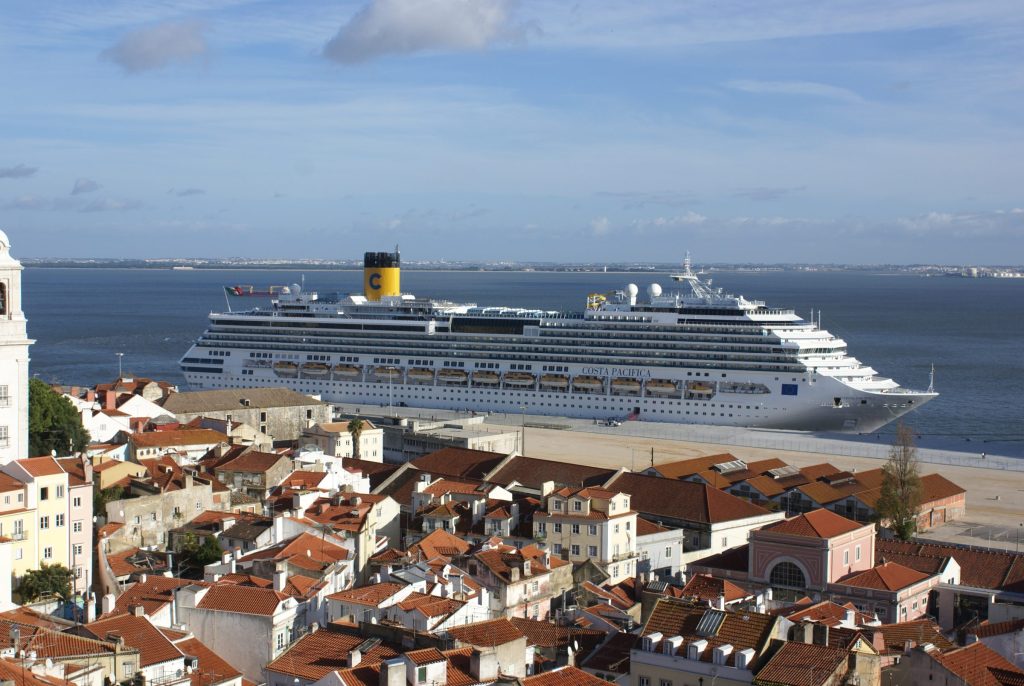
Alfama is the oldest part of Lisbon and the only district that survived the 1755 earthquake more or less intact. That is why it looks nothing like the rest of the city. The streets are not streets so much as gaps between houses, laundry hangs across them, and the layout follows the hill rather than any plan. People either love it immediately or find it exhausting, and both reactions are reasonable.
What makes it the right choice for a first visit is density. Sao Jorge Castle, the Cathedral, the Miradouro das Portas do Sol, the Fado Museum and Tram 28 are all inside a fifteen-minute radius. You are not planning days around transport, you are walking out of the door into the thing you came to see. Our own guests routinely tell us they never used the metro once.
The cost is vertical. Alfama is genuinely steep, and the walk back up from the river at the end of a day is real exercise. If anyone in your group has mobility limits, this matters more than any other factor on this page. The compensation is that the walking routes through Alfama reward you constantly, and there is a miradouro roughly every four minutes to stop at.
On noise: Alfama is residential and quiet at night, with the exception of fado houses, which draw a crowd but close by midnight. It is not a party district. If you want the historic setting without the 3am problem, this is where it lives.
Baixa: Where to Stay in Lisbon if You Want Flat Streets
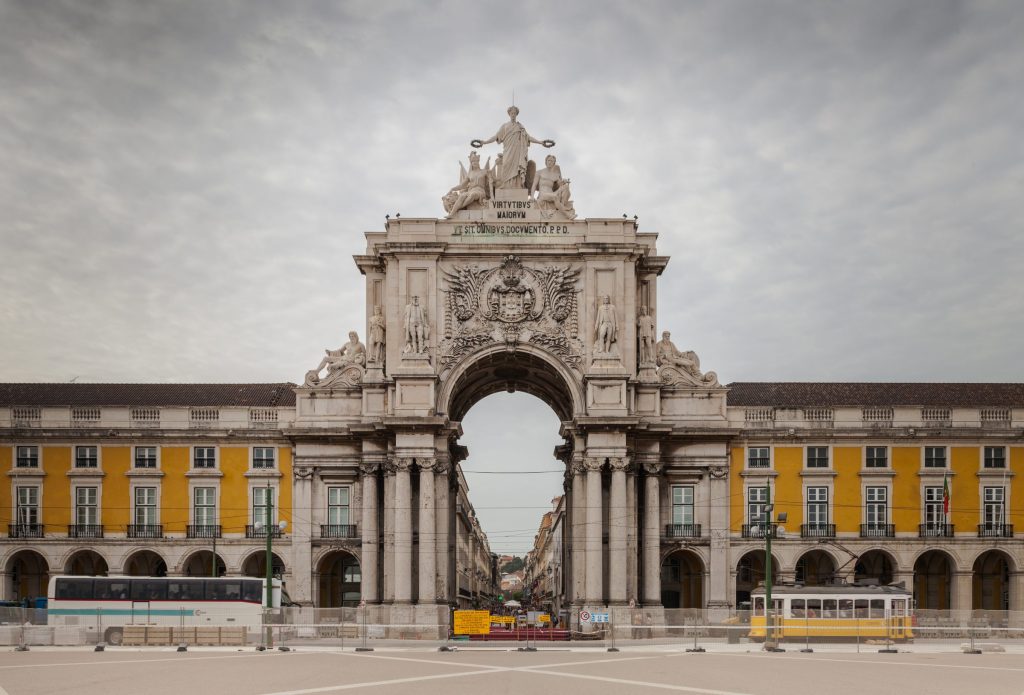
Baixa was rebuilt on a grid after the earthquake, which makes it the flattest and most navigable district in central Lisbon. If the hills are your main concern, this is the answer, and it is not a close call. You can cross the whole neighbourhood without climbing anything.
It is also the transport hub. Rossio and Baixa-Chiado stations sit at either end, the airport is a straight metro run on the red then blue line, and the trains for Sintra and Cascais leave from Rossio and Cais do Sodre respectively. If your trip involves day trips, Baixa removes friction. Our Baixa guide covers Rua Augusta and the surrounding streets in more detail.
The trade-off is character. Baixa is beautiful in a formal, planned way, but it is the part of Lisbon that has been most thoroughly given over to visitors. Restaurants on the main pedestrian streets are priced for tourists and staffed by people who will never see you again. Walk two streets off Rua Augusta and this improves sharply.
Baixa suits travellers who want everything easy: flat ground, direct transport, no navigation. It suits people chasing atmosphere rather less.
Chiado: The Best Lisbon Neighbourhood for Cafes and Shopping
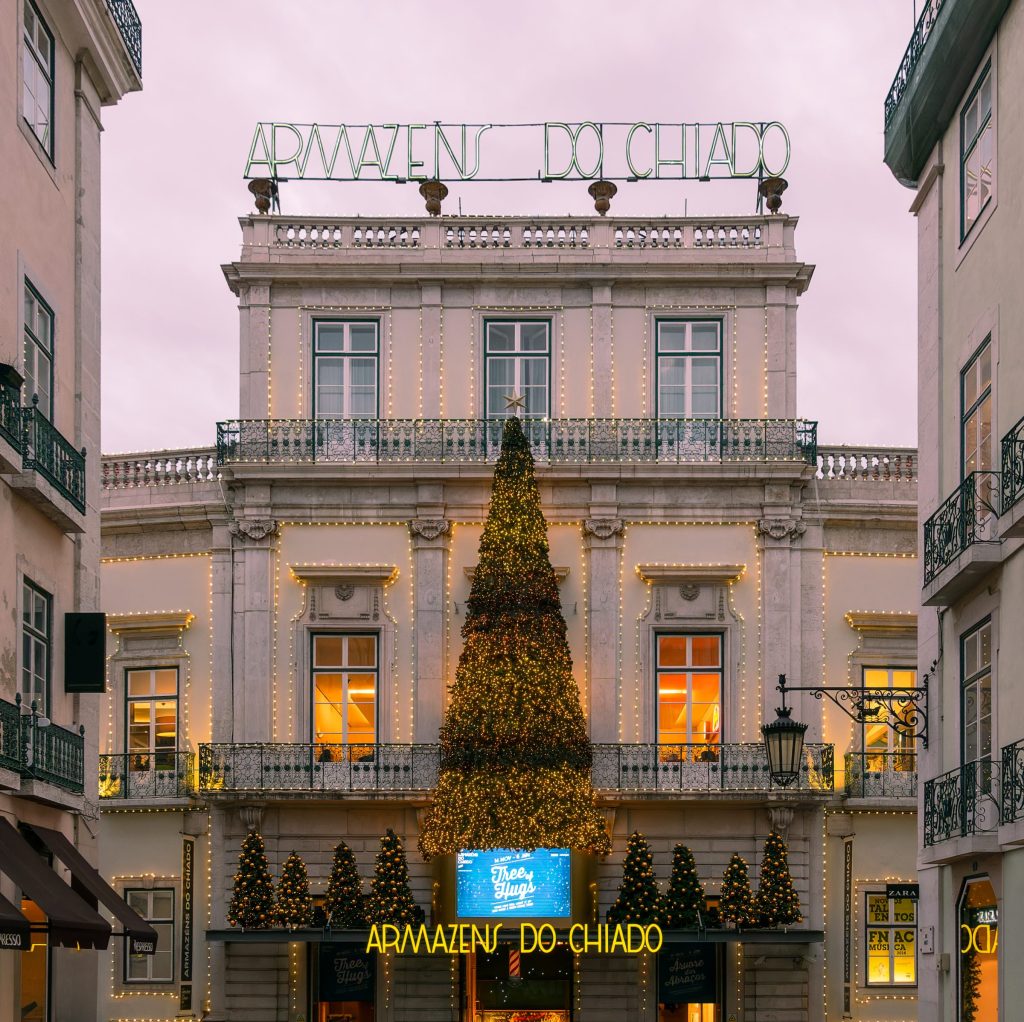
Chiado sits on the slope between Baixa and Bairro Alto and functions as Lisbon’s elegant middle ground. This is where the old cafes are, where the bookshops and theatres are, and where you find the best concentration of proper shopping in the city. It has been the literary and cultural quarter for well over a century, and it still behaves like one.
For couples it is probably the single best area in Lisbon. You get the historic setting without Alfama’s gradients, you can walk to Baixa in five minutes and Bairro Alto in three, and the evening atmosphere is lively without being loud. The Chiado guide goes through the specific streets worth your time.
Chiado is also the most expensive place to sleep in Lisbon, consistently. You are paying for the address. If your budget is the binding constraint, staying ten minutes away in the Old Town gets you the same access for meaningfully less.
Bairro Alto: Where to Stay in Lisbon for Nightlife
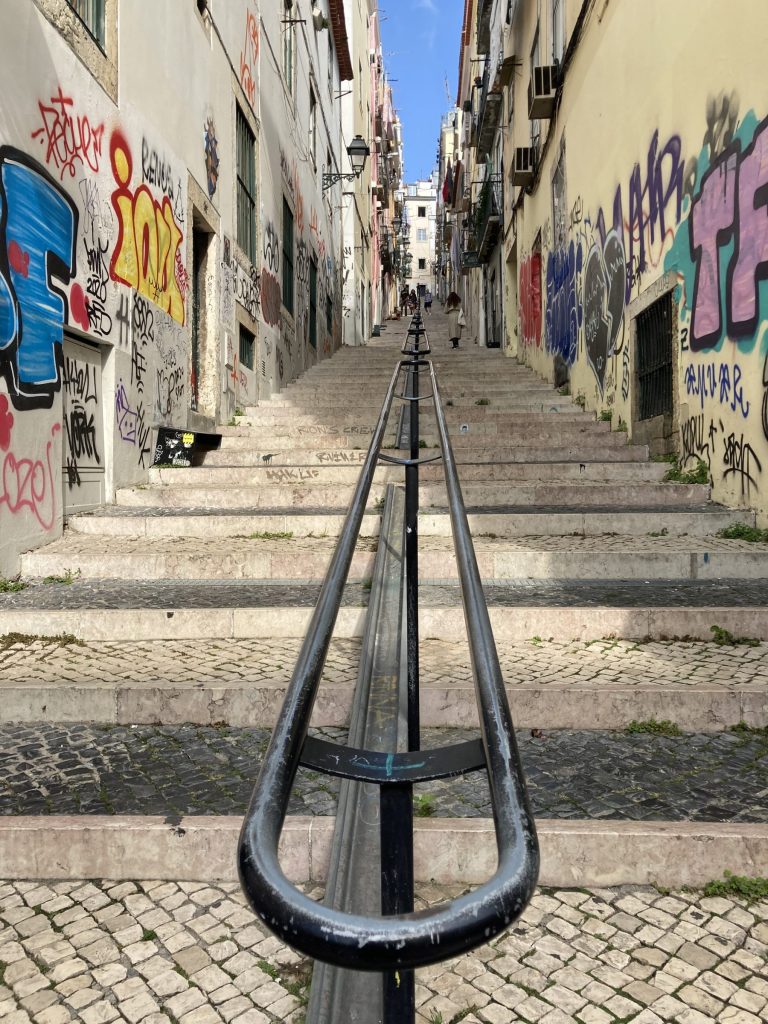
Bairro Alto is quiet, almost sleepy, until about ten at night. Then the shutters come up, the bars open, and several thousand people fill streets that are two metres wide. Drinks are sold through windows, everyone stands outside, and it continues until roughly three in the morning.
If that is what you came for, stay here and you will have an excellent time. If it is not, understand clearly that the noise is not background noise. It is conversation at volume directly beneath your window, and no amount of glazing entirely solves it. Plenty of people book Bairro Alto for the “central location” and then do not sleep for four nights.
The sensible compromise, and the one we would suggest to most people, is to stay a ten-minute walk away and visit. Bairro Alto is close to everything central. You lose nothing by sleeping outside it. Our Bairro Alto guide covers which bars are worth the walk.
Principe Real and Graca: Quieter Places to Stay in Lisbon
If you have been to Lisbon before, or you simply do not want to sleep among visitors, these two are the honest alternatives.
Principe Real sits above Bairro Alto and is the most residential of the central options. It has a beautiful garden square, a concentration of good independent restaurants, antique shops, and a calm that the districts below it lost some years ago. Prices are noticeably lower than Chiado for comparable quality.
Graca is east of the castle, higher again, and has the best free views in the city. The Miradouro da Senhora do Monte is up here and it is the one viewpoint worth setting an alarm for. It feels genuinely lived-in. The catch is straightforward: everything is uphill from everywhere, and you will use Tram 28 or a taxi more than you expect.
Choosing by Trip Type
- Three days, first visit: Old Town. You will not have time to commute.
- A week or more: Principe Real or Graca. The quiet is worth more over seven nights.
- Family with young children: Old Town apartment with a kitchen. Restaurant schedules and small children do not agree.
- Group of six or more: One apartment, not three hotel rooms. Cheaper, and you actually see each other.
- Winter trip: Anywhere central. The crowds thin out and the choice widens considerably.
Lisbon Old Town: Where to Stay if You Want to Walk Everywhere

The phrase “Lisbon Old Town” gets used loosely, so it is worth defining. Properly it means the area around the Se Cathedral and the Castelo perimeter, running down into Alfama on one side and towards Baixa on the other. It is the historic core, and it is where the city is most walkable.
From this pocket, the walking times are short enough to be worth listing plainly. The Cathedral is under five minutes. Tram 28 stops within two. Praca do Comercio and the river are about ten minutes downhill. Sao Jorge Castle is ten minutes up. Chiado is fifteen, Bairro Alto twenty, and Time Out Market about twenty-five along the waterfront.
That density is the entire argument for staying here. Lisbon is a city where transport is charming but slow, and the queue for Tram 28 in summer can run to forty minutes. If you can walk to what you want to see, you simply have more day.
This is where our own apartment sits, which is why we can be specific about the distances rather than vague. For families in particular, being able to walk home for an afternoon nap and come back out again changes how a trip feels. The family setup is described here.
Where to Avoid Staying in Lisbon
Fewer places than people fear, but there are three worth flagging.
Anywhere requiring a metro to reach the centre. Parque das Nacoes is modern, pleasant and genuinely well built, but it is a twenty-minute metro ride from the historic city and you did not fly to Lisbon for the business district. Same reasoning applies to most of the northern suburbs.
Directly on Rua Augusta or Praca da Figueira. Central, yes, but these are the streets where street performers set up, tour groups gather and delivery lorries reverse from six in the morning. One street back is much better.
Cais do Sodre’s immediate bar strip. Pink Street is a good night out and a poor night’s sleep. The wider district is fine and the food is excellent, but check exactly which street you are booking on.
Beyond that, central Lisbon is safe and pleasant to walk at night. If safety is a specific concern, we cover it properly in our guide to staying safe in Lisbon.
Apartment or Hotel: Which Works Better in Lisbon
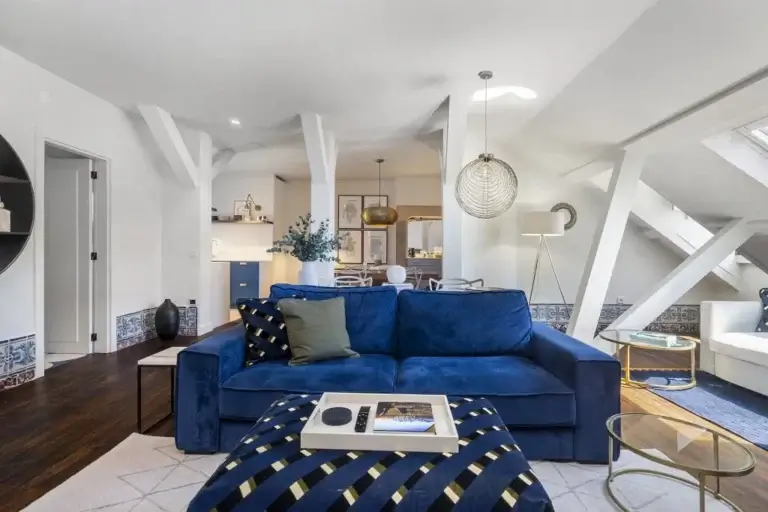
Lisbon’s historic buildings were not designed as hotels, which has a practical consequence. Hotel rooms in the Old Town tend to be small, because the buildings are old and the rooms were once bedrooms in family homes. Apartments in the same buildings keep the original proportions.
For one or two nights this rarely matters. For a week, with children, or in a group, it matters a great deal. A kitchen removes the obligation to eat every meal out, which in a city that serves dinner from eight is genuinely useful with young children. A living room means the group has somewhere to be that is not a bed.
The straightforward comparison: three hotel rooms for six people in Chiado will cost more than one three-bedroom apartment in the Old Town, and you will spend the week messaging each other about where to meet.
“Awesome lodging in the heart of the city. The service is 6 stars if possible. While all the staff were outstanding, Susan and the team were incredibly kind and helpful during our stay. I would not stay anywhere else when returning.”
— DM B, Local Guide, via  Google
Staying in the Old Town
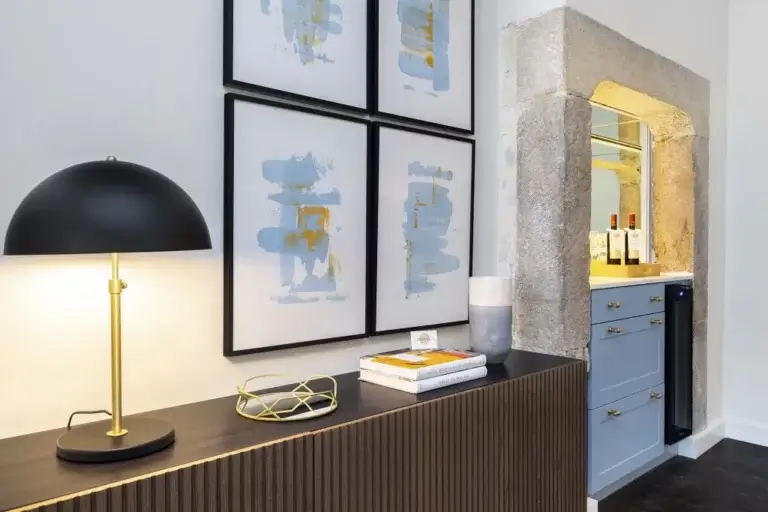
Casa Almada sleeps nine across three bedrooms, with a private rooftop terrace and Tram 28 at the bottom of the street.


Getting Around Once You Have Chosen
Whichever area you pick, two things make Lisbon easier. The first is a Viva Viagem card, loaded with credit rather than single tickets, which works on the metro, buses, trams and the lifts. The second is accepting that Tram 28 is a tourist attraction rather than transport, and planning accordingly.
The metro is clean, cheap and covers the airport, but it does not reach Alfama or the castle, because the tunnels could not be built through the hill. That is precisely why staying in the Old Town matters so much. Our Lisbon metro map guide sets out the four lines, and the airport transfer guide covers the run in from the terminal.
Frequently Asked Questions
Which Part of Lisbon Is Best to Stay In?
For a first visit, the Old Town around the Se Cathedral and Castelo. It puts the castle, cathedral, Alfama, Tram 28 and the main viewpoints within a fifteen-minute walk, which means you spend your time seeing Lisbon rather than travelling across it. If hills are a concern, Baixa is the flat alternative five minutes downhill.
Is It Better to Stay in Lisbon Old Town or City Centre?
They overlap more than the phrasing suggests. The Old Town is the historic core around the castle and cathedral; the city centre usually means Baixa and Chiado just below it. The Old Town gives you atmosphere and proximity to the sights but involves steep walks. The centre gives you flat streets and transport links with less character. For most first visits the Old Town wins.
Where to Stay in Lisbon for the First Time?
Stay central and walkable. The Old Town, Baixa or Chiado all work, and all three put you within twenty minutes on foot of nearly everything a first trip covers. Avoid booking on distance from the airport, which is a twenty-minute metro ride from anywhere central and should not influence the decision.
Where Do Most Tourists Stay in Lisbon?
Baixa and Chiado take the largest share, because they hold most of the hotel stock and appear first on booking sites. Alfama and the Old Town are more apartment-led. Popularity is not the same as suitability, and the busiest streets in Baixa are among the noisiest places to sleep in the city.
Where Should You Avoid Staying in Lisbon?
Avoid anywhere needing a metro ride to reach the historic centre, such as Parque das Nacoes or the northern suburbs. Within the centre, avoid the immediate bar strips of Bairro Alto and Pink Street unless you intend to be out late, and avoid ground-floor rooms directly on Rua Augusta.
Is Alfama or Baixa Better for Families?
Baixa is easier with a pushchair because it is flat and the pavements are wide. Alfama is better for older children who can manage the hills, because there is more to look at and less traffic. With young children the deciding factor is usually the accommodation rather than the district: a kitchen and a separate living room matter more than the postcode.
More to Explore
Image credits: Alfama, Matti Blume (CC BY-SA). Baixa, Diego Delso (CC BY-SA 3.0). Chiado, Jules Verne Times Two (CC BY-SA 4.0). Bairro Alto, Dudva (CC BY-SA 4.0). Graca viewpoint, Pedro from Lisboa (CC BY 2.0). Neighbourhood photographs via Wikimedia Commons. Interior photography by Casa Almada.