
TLDR: Alfama is the medieval Moorish quarter that survived the 1755 earthquake intact — narrow cobbled lanes, painted azulejo facades, washing lines between balconies, and Fado bars hidden behind unmarked doors. The name comes from the Arabic al-hammam (the baths). Best walking route: from Casa Almada down through Sé Cathedral, Miradouro de Santa Luzia, Largo das Portas do Sol, Beco de Sant’Helena, Rua dos Remédios, ending at the Tile Museum (Museu Nacional do Azulejo).
Planning your stay?
Apartment in Lisbon's Old Town — check availability and book direct.
Insider tip from Casa Almada
Walk Alfama on a Sunday morning at 8am with a takeaway coffee. The neighbourhood is at its most amazing before the tour groups arrive — old men playing cards in doorways, sardines grilling in alleys, washing being hung between balconies. By 11am the cruise-ship walking tours have taken over and the photogenic moments are gone.
Alfama is the part of Lisbon that the 1755 earthquake forgot. While Marquis of Pombal’s engineers rebuilt Baixa in straight neoclassical lines after the disaster, the medieval Moorish lanes of Alfama survived almost untouched on the steep hillside east of the Sé Cathedral. Walk these streets and you walk a city older than London.
Casa Almada sits at the western edge of Alfama on Rua do Almada near the Sé. From our front door you are 4 minutes from the first viewpoint and 30 seconds from the cathedral. This is the local walking guide to the old quarter — what to see, where to eat, where to listen to Fado, and the lanes that are amazing precisely because they are not famous.
A short Alfama history

Alfama is the oldest part of Lisbon. The Phoenicians settled here around 1200 BC, the Romans built a fishing port, and the Visigoths defended it against the Moors. The Moors took the city in 711 AD and held it for 433 years. During this time they laid out the steep narrow lanes, the small inner courtyards and the structure of the streets that survives today. The name “Alfama” comes from the Arabic al-hammam, “the public baths”.
King Afonso I retook Lisbon in October 1147 with a passing crusader fleet. Alfama remained the densely-populated working-class district through the medieval centuries — fishermen, sailors, tanners, washerwomen — and crucially this was where Lisbon’s Jewish community concentrated until the Inquisition of 1497.
The 1755 earthquake levelled most of central Lisbon but left Alfama largely intact, partly because of the dense Moorish stonework foundations. While Marquis of Pombal’s engineers rebuilt Baixa from scratch in neoclassical grids, Alfama stayed medieval. The 19th and 20th centuries brought Fado, then poverty, then the recent careful gentrification.
Planning a Lisbon stay?
Why not stay with me at Casa Almada?
220 m² luxury apartment in the heart of the apartment in Lisbon old town, sleeping up to 9 guests plus 2 infants. Tram 28 at the bottom of the street, Sé Cathedral around the corner. From €219 per night.
Check Casa Almada availability →
FTC disclosure: this is our own apartment booking page.
The walking route — Sé to the Tile Museum
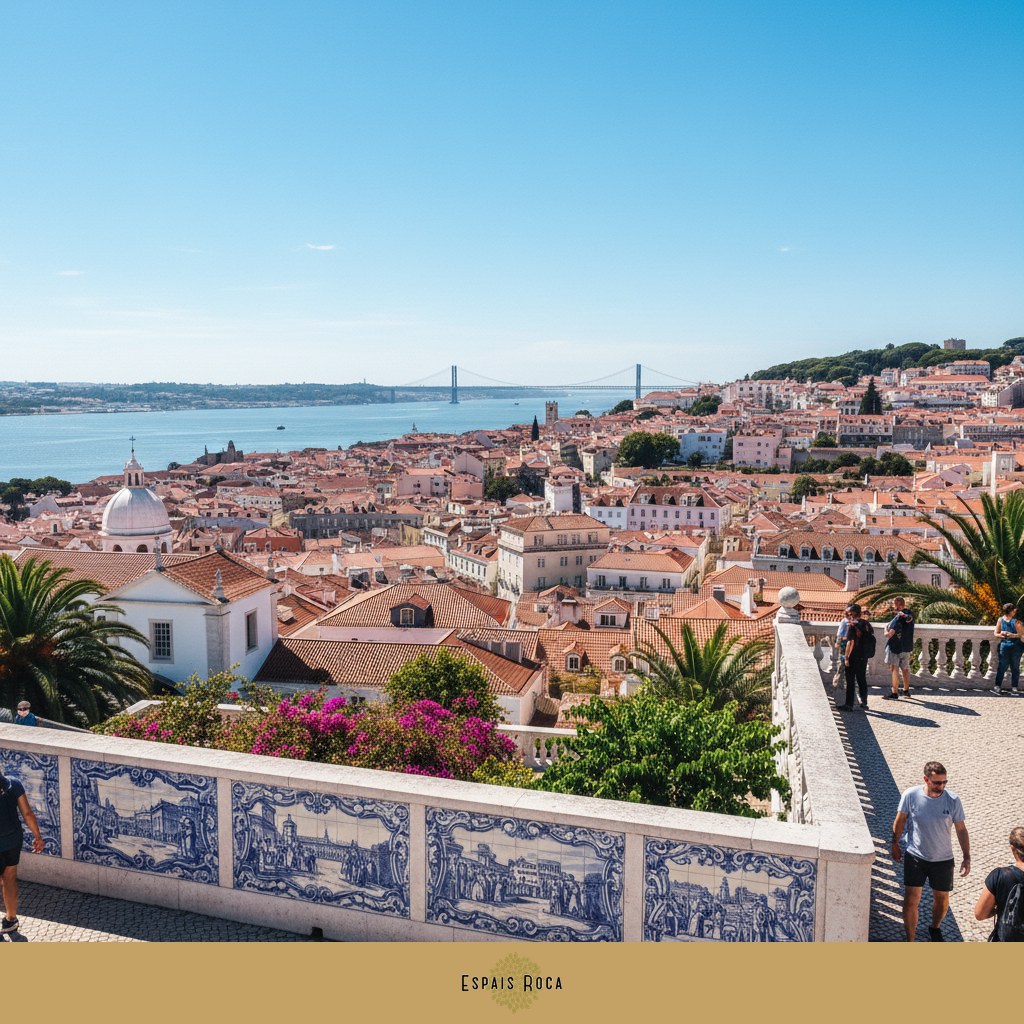
Start at Casa Almada and walk 90 seconds to the Sé Cathedral on Largo da Sé. Free entry to the church, €5 for the cloister with its visible Roman, Visigothic and Moorish foundations.
Cross to Igreja de Santo António opposite the Sé — the small church built on the spot where Saint Anthony of Padua was born in 1195. Then walk uphill on Rua Augusto Rosa to Miradouro de Santa Luzia (4 min, free) for the painted azulejo terrace and the Alfama rooftop view. Continue 100 metres to Largo das Portas do Sol for the bigger viewpoint.
Now drop into Alfama proper. Take the steps down on Beco de Sant’Helena, then walk along Rua dos Remédios — the spine of medieval Alfama. Igreja de São Miguel is the small 13th-century parish church halfway along. End at the Casa dos Bicos (the 16th-century pointed-stone house, now the José Saramago Foundation, €3 entry) on Rua dos Bacalhoeiros.
For the longer version, continue 15 minutes east along the riverfront to the Museu Nacional do Azulejo at Rua da Madre de Deus 4 — the National Tile Museum in the 1509 Madre de Deus convent. €5 entry, Tue-Sun 10am-6pm. The Lisbon panorama tile mural from 1700 (showing the city before the earthquake) is the headline exhibit.
Where to eat in Alfama
Cantinho do Aziz on Rua de São Lourenço is the Mozambican-Portuguese family restaurant 5 minutes from Casa Almada. Open since 1957, three generations of the same family. €15-€25 per head. The prawn xacuti curry and the homemade samosas are amazing. Wed-Mon, closed Tuesdays.
Ti Natércia on Rua de São Tomé is the 18-seat tasca run by Natércia herself in her seventies. Whatever the boats brought in. Grilled fish, octopus rice, vinho verde from a jug. €18-€25 per head. 4 minutes from Casa Almada.
Santo António de Alfama on Beco de São Miguel 7 has the courtyard tables under a fig tree. Portuguese cooking with a slight modern lean. €25-€35 per head. Book ahead.
Pateo 13 on Calçadinha de Stº Estêvão 13 is the local-secret seafood grill — sardines, mackerel, dourada, all charcoal-grilled outside on the cobbles. €15-€25 per head. Open Mon-Sat for lunch and dinner, no website.
“Espais Roca have a handful of holiday properties dotted across Europe and I can honestly say they all deliver such an amazing experience. The attention to detail is incredible.”
westlee wallace · Family holiday (Espais Roca brand)
Fado in Alfama
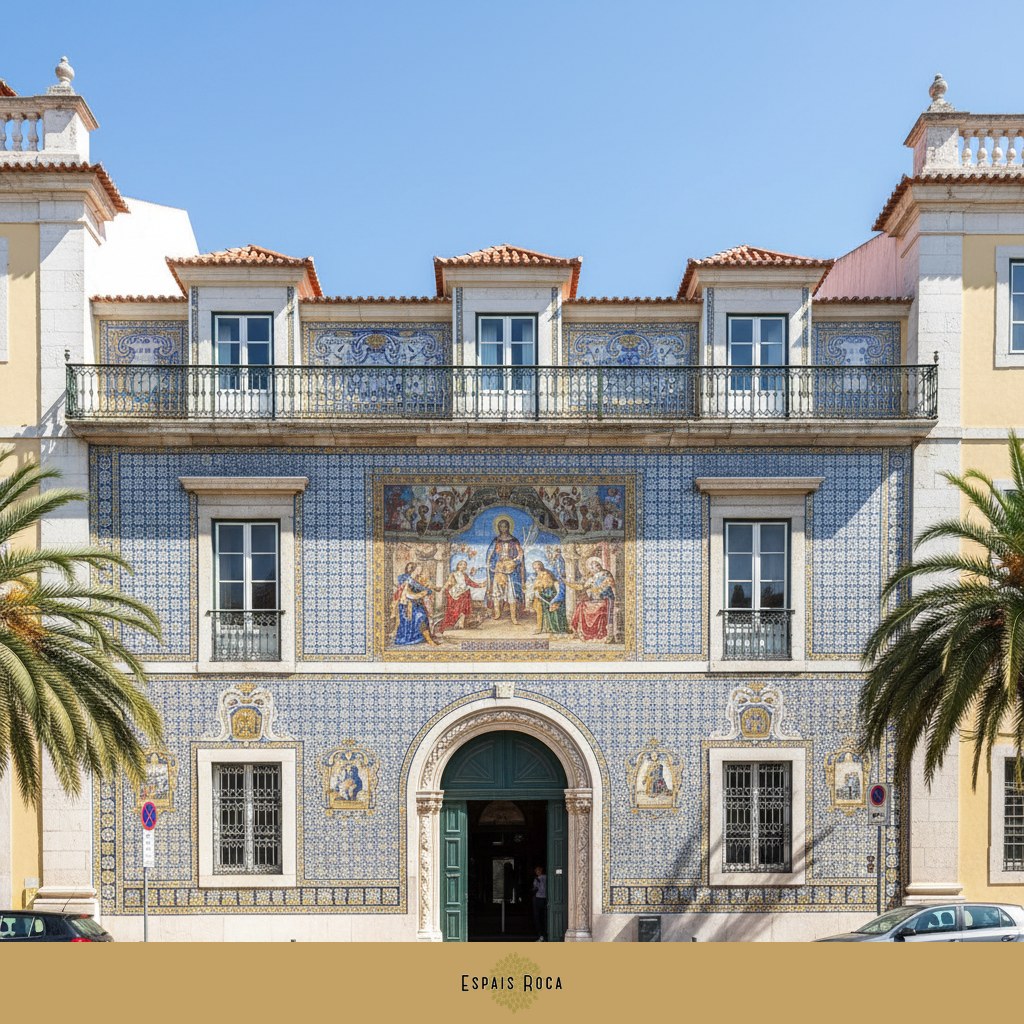
Alfama is the spiritual home of Fado — the music born in the 19th-century working-class lanes. Two kinds of venue today: the formal Fado restaurants where you book dinner and watch a polished show, and the informal tascas where amateurs sing without warning over a glass of wine.
Clube de Fado on Rua de São João da Praça 92-94 is the most famous formal venue. Nightly shows at 8.30pm and 10.45pm, dinner from €60, show only €20. Mariza, Camané and Carminho have all sung here. 5 minutes from Casa Almada.
A Baiuca on Rua de São Miguel 20 is the informal opposite — small dining room, locals singing in turn, no booking. Dinner with Fado around €25-€40 per head. 5 minutes from Casa Almada. Walk in by 7.30pm.
Casa de Linhares on Beco dos Armazéns do Linho 2 is a 16th-century palace turned Fado restaurant. €70-€90 per head with dinner. Mesa de Frades at Rua dos Remédios 139 is the smallest and most atmospheric, set in a tiled former chapel with only 30 covers. €60-€80, book a week ahead.
- Sé Cathedral: Free, €5 cloister. 90 sec from Casa Almada.
- Miradouro de Santa Luzia: Free terrace with painted tiles. 4 min walk.
- Largo das Portas do Sol: Bigger viewpoint, kiosk café. 5 min walk.
- Casa dos Bicos / Saramago Foundation: €3, Tue-Sat 10am-6pm.
- Museu Nacional do Azulejo: €5, Tue-Sun 10am-6pm. End of the walk.
- Cantinho do Aziz: Mozambican-Portuguese, €15-€25, 5 min from Casa Almada.
- Ti Natércia: 18-seat tasca, €18-€25, 4 min walk.
- Clube de Fado: Dinner+show €60-€80, show only €20. 5 min walk.
- A Baiuca: Informal Fado, €25-€40, 5 min walk.
- Best time to walk Alfama: Sunday morning 8-10am or weekday evening 6-8pm.
Photos of Casa Almada


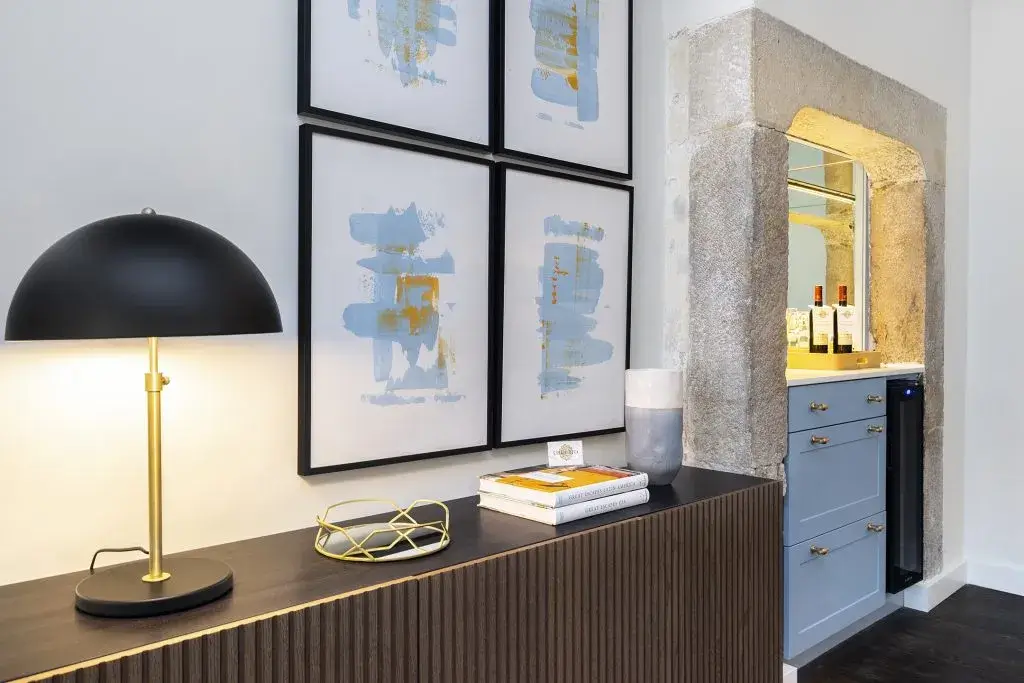

View the full Casa Almada gallery →
FTC disclosure: links to our own apartment booking page.
Stay with us in Lisbon
Casa Almada — luxury family apartment in the heart of Lisbon
220 m² of beautifully restored space across 3 bedrooms and 2 bathrooms, sleeping up to 9 guests plus 2 infants. Three super king beds that split into singles, blackout blinds throughout, original art by Lisbon artists, Egyptian cotton linens, Rituals products, and a stunning rooftop terrace with panoramic city views. Tram 28 at the bottom of the street, Sé Cathedral around the corner, Castelo de São Jorge ten minutes on foot. A far cry from the soulless chain hotels of yesterday.
From €219/night. FTC disclosure: this is our own apartment booking page.
Frequently asked questions
What does Alfama mean?
The name comes from the Arabic al-hammam, meaning “the baths”. It refers to the public Moorish baths that operated in the district during the 433 years of Moorish rule (711-1147 AD). Several of the Roman and Moorish bath foundations are still visible in the cloisters of the Sé Cathedral.
How do you get to Alfama in Lisbon?
Walk. Alfama is the medieval district immediately east and downhill of the Sé Cathedral, in the central Old Town. From Casa Almada it is 90 seconds to the Sé and 4-5 minutes to the first Alfama viewpoints. Tram 28 also passes through, with stops at the Sé and Largo das Portas do Sol.
Is Alfama worth visiting?
Yes — it is the most atmospheric historic district in Lisbon and the only large central area to survive the 1755 earthquake intact. The medieval Moorish lanes, the painted facades, the viewpoints and the Fado bars are the reasons most visitors come to Lisbon in the first place. Allow at least 3-4 hours for a slow walk.
Where is the best Fado in Alfama?
Clube de Fado on Rua de São João da Praça for the formal dinner-and-show experience, A Baiuca on Rua de São Miguel for the informal local atmosphere, and Mesa de Frades on Rua dos Remédios 139 for the most atmospheric small venue (30 covers, former tiled chapel).
Is Alfama steep?
Yes, the streets climb significantly between the riverside (sea level) and the Castelo de São Jorge (about 100 metres up). The cobbles are also slick when wet. Wear flat shoes with grippy soles, take the funicular options when needed (Lavra and Glória from Restauradores), and plan downhill rather than uphill walks where possible.
If you are planning your stay around this, take a look at the rest of our Lisbon travel blog for itineraries, restaurants and seasonal tips.