
TLDR: Bairro Alto is the historic bohemian quarter of Lisbon, a grid of narrow cobbled streets between Largo do Camões, Praça das Flores and Rua de São Pedro de Alcântara. Quiet residential warren by day, the city’s loudest bar district by night. Founded in the 16th century as a “high town” outside the medieval walls. Now famous for Fado houses, small printing presses, art galleries and several hundred drinking holes. From Casa Almada it is 18 minutes’ walk uphill via Chiado.
Planning your stay?
Luxury Apartment Stays at Casa Almada — check availability and book direct.
Insider tip from Casa Almada
Walk into Tasca do Chico on Rua do Diário de Notícias 39 at 8.30pm before the 9pm amateur Fado set. Order a glass of red Alentejo (€2.50), a plate of presunto (€8), and stand at the bar. Locals turn up with their guitarras and start singing without warning. No cover charge, no booking, and the room falls completely silent for each fadista. Most amazing late evening in the city if you can make it work.
Bairro Alto translates as “high quarter” — the steep grid of streets above Chiado that the locals built outside the medieval walls in the 1500s. Originally aristocratic, then printing presses, then bohemian artists, then the city’s drinking heart. Today it is two completely different neighbourhoods stacked on top of each other: a quiet residential village by day with cats sunbathing on cobbles, and an open-air bar party by night with crowds spilling out of every doorway.
Casa Almada sits 18 minutes’ walk down the hill in the Old Town. This is the practical local guide to Bairro Alto — what to do during the day, where to drink at night, the Fado houses worth booking, and the streets that locals actually live on.
A short history of Bairro Alto

Bairro Alto was laid out in the 1500s as a planned aristocratic district outside the medieval city walls. The grid pattern — unusual for old Lisbon — survived the 1755 earthquake intact while most of the lower city was destroyed. By the 18th century the aristocrats had moved out and the printing presses moved in. Several major Portuguese newspapers ran here through the 19th and 20th centuries.
The bohemian phase began in the 1980s when low rents drew artists, designers, students and Fado musicians. The bar scene followed in the 1990s — small doorways turning into informal drinking spots, then licensed properly through the 2000s.
Today Bairro Alto is split between residents (around 3,000 mostly older Lisbon families), small craft and design businesses, traditional Fado houses, and the dense bar economy. The contrast between morning quiet and evening party is what makes the neighbourhood unique.
Planning a Lisbon stay?
Why not stay with me at Casa Almada?
220 m² luxury apartment in the heart of the old town, sleeping up to 9 guests plus 2 infants. Tram 28 at the bottom of the street, Sé Cathedral around the corner. From €219 per night.
Check Casa Almada availability →
FTC disclosure: this is our own apartment booking page.
What to do during the day

Miradouro de São Pedro de Alcântara is the headline daytime stop. The terraced viewpoint sits at the top of the Glória funicular and looks east across Baixa to the Castelo de São Jorge on the opposite hill. Free, always open, with a small kiosk café. Best at sunset.
For art and design, Galeria 111 on Rua Cecílio de Sousa shows contemporary Portuguese artists. A Vida Portuguesa on Rua Anchieta in adjacent Chiado is the famous Portuguese-only homewares shop — soaps, ceramics, vintage tinned fish, hand-printed stationery.
For an unusual afternoon, the Camões Theatre Museum on Largo São Carlos shows the history of Portuguese performing arts (€4, Tue-Sun 10am-5pm). The São Roque Church on Largo Trindade Coelho has the most ornate Baroque interior in Lisbon — the Chapel of São João Baptista alone cost more than the whole rest of the church combined when built in Rome 1742.
The Fado houses worth booking
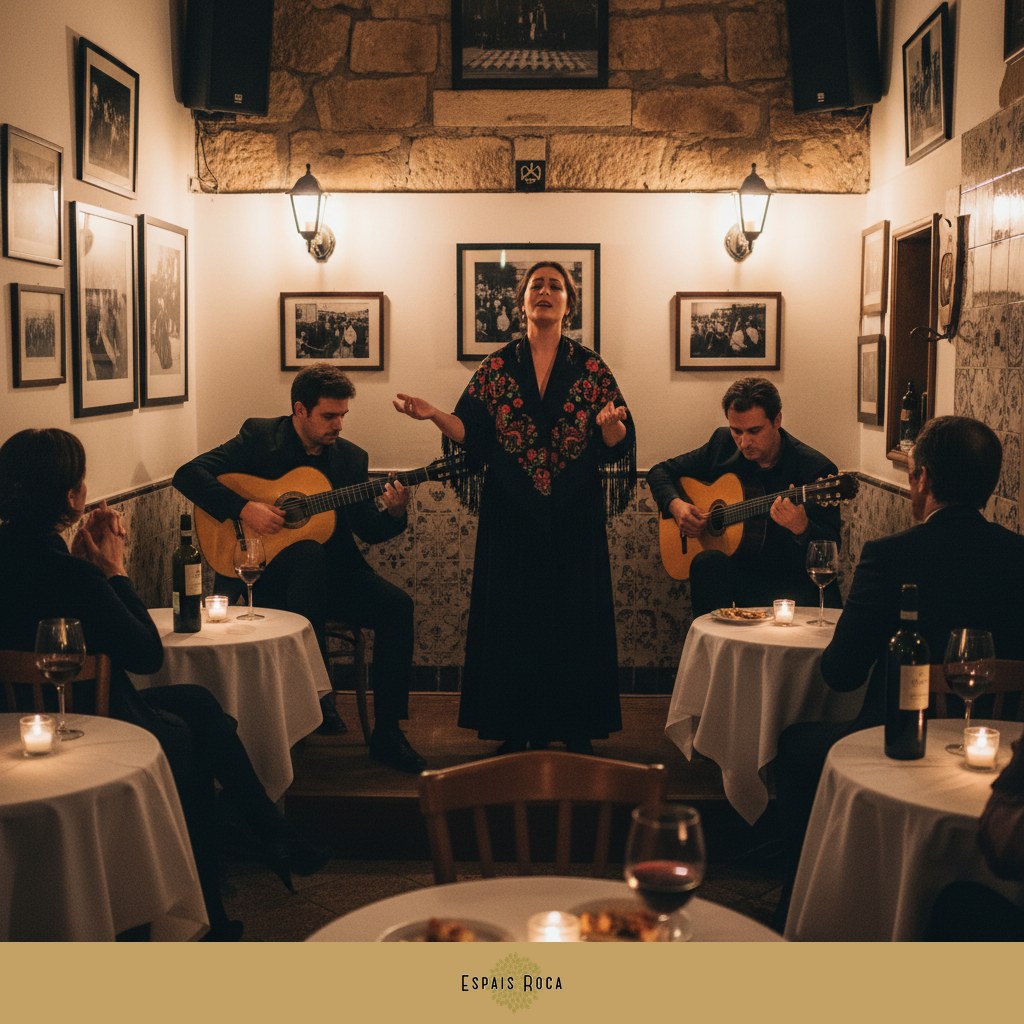
Tasca do Chico on Rua do Diário de Notícias 39 is the local-favourite informal Fado bar. No cover charge, no booking — walk in, order a drink and food, and amateur fadistas start singing at 9pm and 11pm. The room goes silent for each song, applause comes only at the end. Standing room and bar tables only.
Senhor Vinho on Rua do Meio à Lapa (a 10-minute walk from Bairro Alto proper) is the upmarket Fado restaurant where Mariza launched her career. Dinner with live Fado at 8.30pm and 10pm, €60-€90 per head with food and wine. Advance booking essential. Dress smart casual.
Adega Machado on Rua do Norte 91 has been running Fado dinner shows since 1937. Three sets nightly from 8.30pm, €60-€80 per head. Café Luso on Travessa da Queimada 10 is the quieter alternative, also dinner-and-show, €55-€75.
“Espais Roca have a handful of holiday properties dotted across Europe and I can honestly say they all deliver such an amazing experience. The attention to detail is incredible.”
westlee wallace · Family holiday (Espais Roca brand)
The bar district at night
After 9pm Bairro Alto transforms. Streets fill with people drinking outside, every other doorway opens as a bar, and the noise carries through to 2-3am. Best streets to walk: Rua da Atalaia, Rua do Diário de Notícias, Rua das Salgadeiras, Travessa da Queimada.
Reliable spots beyond Tasca do Chico: Pavilhão Chinês on Rua Dom Pedro V 89 (eccentric private-club style ambiance with thousands of antique objects on the walls, opens 6pm), Páginas Tantas on Rua do Diário de Notícias 85 (jazz bar), Capela on Rua da Atalaia 45 (small late-night cocktail bar in a former chapel building, opens 9pm).
For food in Bairro Alto, 100 Maneiras on Rua do Teixeira 35 does ambitious Portuguese tasting menus (€95). Pap’Açorda at Time Out Market is the relocated Bairro Alto classic. Belcanto by José Avillez sits in adjacent Chiado at €245.
The trade-off of Bairro Alto: brilliant for one or two evenings, miserable to sleep in if you have small children. The cobbled streets carry every conversation upwards. We recommend walking over from quieter Casa Almada in the Old Town — 18 minutes there, 6 minutes Bolt back.
- Founded: 1500s. Survived the 1755 earthquake intact.
- Layout: Grid of 7 streets across, 9 streets uphill.
- Daytime: Quiet residential village, cats on cobbles.
- Nighttime: Open-air bar district, 9pm-3am.
- Headline viewpoint: Miradouro de São Pedro de Alcântara.
- Best Fado bar: Tasca do Chico (no cover, 9pm and 11pm sets).
- Best dinner Fado: Senhor Vinho (€60-€90, Mariza’s alma mater).
- Best tasting menu: 100 Maneiras (€95).
- Best bars: Pavilhão Chinês, Páginas Tantas, Capela.
- From Casa Almada: 18 min walk uphill via Chiado, 6 min Bolt back (€5-€7).
Photos of Casa Almada


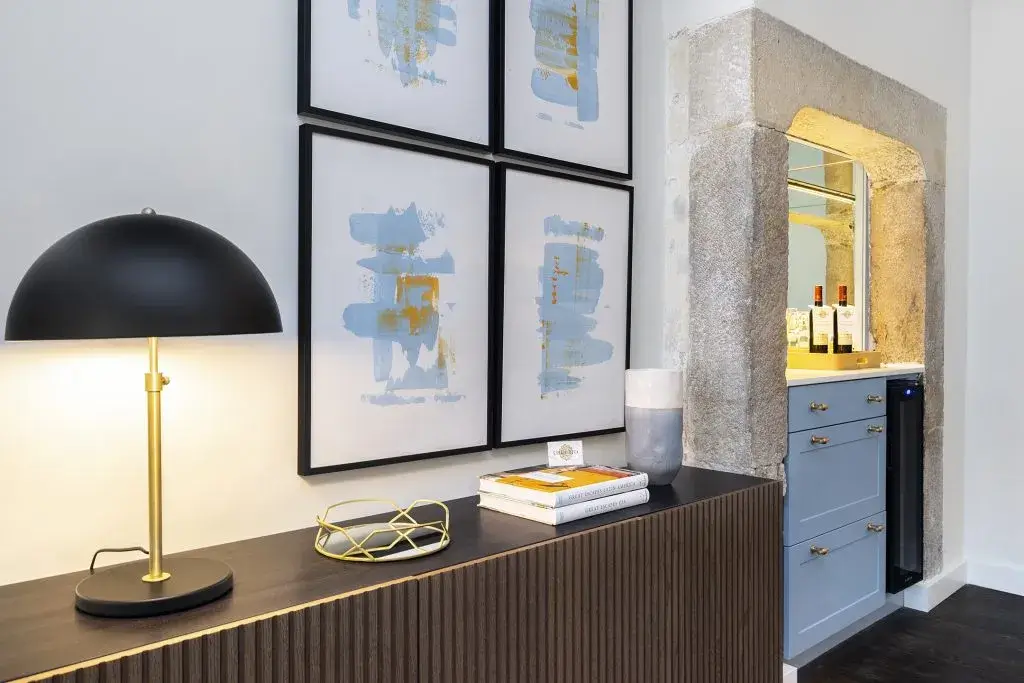

View the full Casa Almada gallery →
FTC disclosure: links to our own apartment booking page.
Stay with us in Lisbon
Casa Almada — luxury family apartment in the heart of Lisbon
220 m² of beautifully restored space across 3 bedrooms and 2 bathrooms, sleeping up to 9 guests plus 2 infants. Three super king beds that split into singles, blackout blinds throughout, original art by Lisbon artists, Egyptian cotton linens, Rituals products, and a stunning rooftop terrace with panoramic city views. Tram 28 at the bottom of the street, Sé Cathedral around the corner, Castelo de São Jorge ten minutes on foot. A far cry from the soulless chain hotels of yesterday.
From €219/night. FTC disclosure: this is our own apartment booking page.
Frequently asked questions
What is Bairro Alto known for?
Bairro Alto is the bohemian quarter of Lisbon, famous for its dense bar scene, Fado houses, and the contrast between quiet daytime residential streets and a loud open-air drinking district at night. The grid of 16th-century cobbled streets sits above Chiado, between Largo do Camões and Príncipe Real.
Should I stay in Bairro Alto?
Only if you genuinely want to be in the middle of the night-time bar scene and you do not have small children. The cobbled streets carry noise until 3am every Friday and Saturday. Stay at Casa Almada in the quieter Old Town and walk 18 minutes over to Bairro Alto for the night out — the experience is identical and the sleep is real.
What is the best Fado venue in Bairro Alto?
Tasca do Chico on Rua do Diário de Notícias 39 for the free informal amateur sets at 9pm and 11pm. Senhor Vinho on Rua do Meio à Lapa for the upmarket dinner-and-Fado at €60-€90 per head. Adega Machado on Rua do Norte 91 has been running Fado dinner shows since 1937.
When does Bairro Alto come alive?
After 9pm. Bars open from 7-9pm, the streets fill from 10pm, peak crowd 11pm-2am. Sunday and Monday are quiet — many bars are closed. Best nights are Thursday, Friday and Saturday. The Fado houses run nightly except Sunday.
How do I get to Bairro Alto from the Old Town?
From Casa Almada, walk 18 minutes uphill via Chiado — through Praça do Município, up Rua Garrett past the Brasileira café, and into Bairro Alto via Largo do Camões. Or take the Glória funicular from Praça dos Restauradores up to Miradouro de São Pedro de Alcântara (€4 single, runs until 11.55pm).
If you are planning your stay around this, take a look at the rest of our Lisbon travel blog for itineraries, restaurants and seasonal tips.