
The Short Answer
Planning your stay?
Luxury Apartment Stays at Casa Almada — check availability and book direct.
Costa da Caparica is a 15km run of golden Atlantic sand just south of Lisbon, reachable in about 30 to 40 minutes by bus or by a quick ferry and bus combo. The northern beaches near the town are easy for families and beginner surfers, while the summer Transpraia mini-train carries you down to the wilder, quieter southern stretches. Go on a weekday in June or September if you want sand to yourself, and pack a windbreaker because the breeze is real.
Insider Tip
Skip the road and take the ferry from Cais do Sodre to Cacilhas, then catch the bus onward. The crossing costs around €1.55, the river views are free, and you completely dodge the bridge traffic that clogs the 25 de Abril every summer afternoon. Cais do Sodre is a five minute walk from Casa Almada, so you can be on the water before you have finished your coffee.
Lisbon does a lot of things well, but its in-city riverfront is for strolling, not swimming. When you want actual ocean, you head for Costa da Caparica, the long sandy coast that sits just across the Tagus to the south. It is the closest proper beach to the centre, it is enormous, and on a clear morning you can be standing in the Atlantic surf less than an hour after leaving your front door.
This is not a polished resort coastline. It is a working, slightly scruffy, very Portuguese stretch of dunes, surf schools, fish grills and beach bars that locals have loved for generations. That is exactly why it is worth your time. Below is the honest, practical version: how to get there, which beach suits which kind of day, where the surf is, and the small things nobody tells you until you have already made the mistake.
What Costa da Caparica actually is

Think of Costa da Caparica as one continuous beach roughly 15km long, backed by dunes and a pine forest, divided only by imaginary lines and a string of beach bars. The northern end sits beside the town of Costa da Caparica itself, with a promenade, restaurants and easy access. The further south you walk or ride, the wilder and emptier it gets, until you reach almost untouched dunes near Fonte da Telha.
Because it faces the open Atlantic, the water is bracing rather than balmy. Summer sea temperatures sit around 18C to 20C, which is refreshing on a hot day and a quick shock on a cool one. The flip side of that exposure is clean, powerful surf and air that always feels fresh, even in August. If you have already explored the calmer bays west of the city among the Lisbon coast beaches, Caparica is the bigger, brawnier, more local cousin to the south.
Want a beach day base in central Lisbon?
Check AvailabilityHow to get to Costa da Caparica from Lisbon
You have three sensible options, and which one wins depends on where you are staying and how much you hate sitting in traffic. None of them is complicated.
- Direct bus. Carris Metropolitana buses run from Praca de Espanha and Campo Grande straight across the bridge to Costa da Caparica. The 161 also leaves from near Marques de Pombal. Allow roughly 35 to 45 minutes depending on traffic, and budget a few euros each way.
- Ferry plus bus. Take the ferry from Cais do Sodre to Cacilhas (about €1.55, ten minutes on the water), then connect to a bus heading to Caparica or Fonte da Telha. Slightly more steps, far nicer journey, and immune to bridge jams.
- Car or taxi. Around 20 to 30 minutes via the 25 de Abril Bridge when the road is clear. The catch is the road is rarely clear on a summer afternoon, and beach parking fills fast. If you drive, arrive early or leave after sunset.
For a deeper look at organising coast and countryside excursions, our guide to day trips from Lisbon covers how Caparica fits alongside Sintra, Cascais and the rest.
The Transpraia mini-train to the wild south
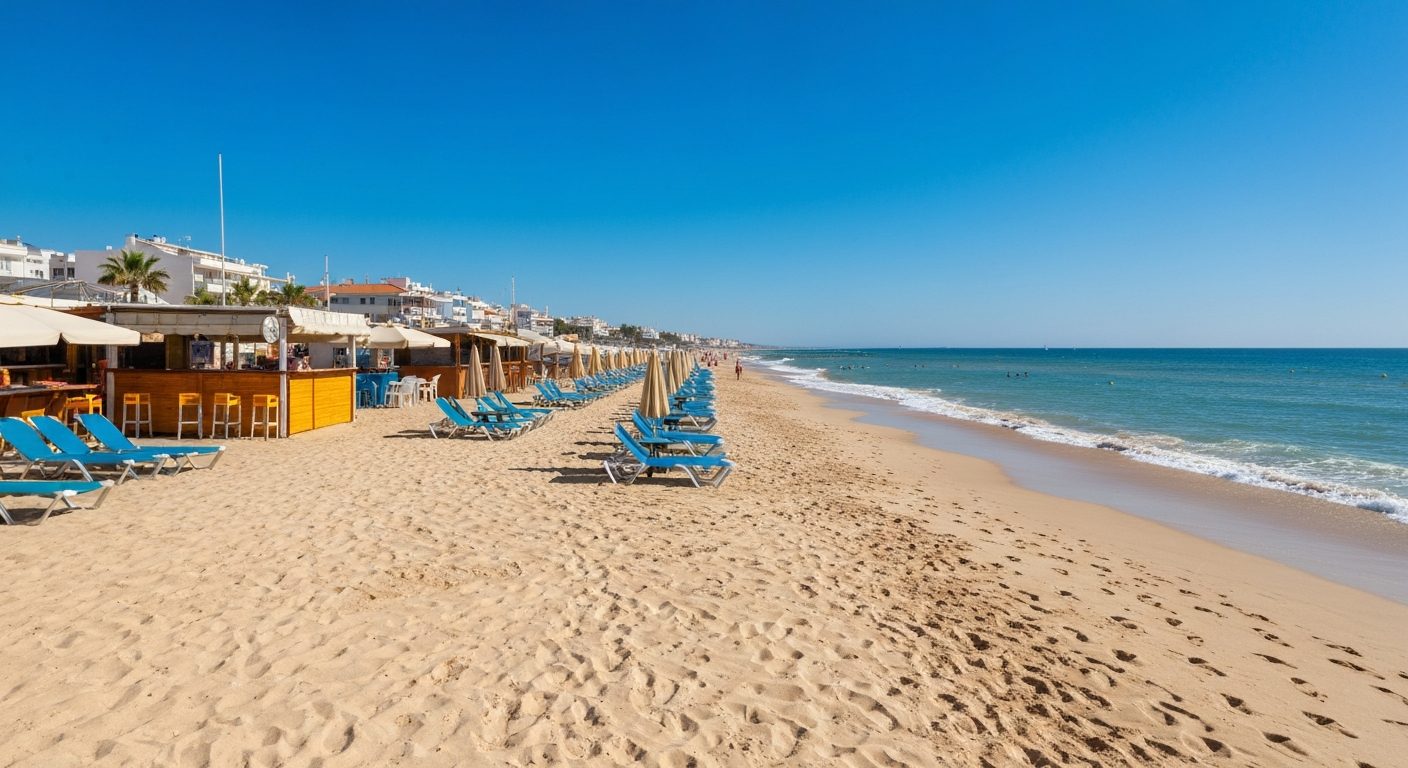
This is the part most first-time visitors miss. From roughly June to September a little open-sided tourist train called the Transpraia runs about 9km south from the town, with around twenty numbered stops, each marking a different beach. The further down the line you ride, the fewer people and the wilder the dunes.
If the beach by the town feels packed, do not give up and go home. Hop on the Transpraia, ride past stop 10 or 15, and step off onto sand with a fraction of the crowd. It is cheap, it is fun, and it is the single best way to find space on a busy weekend. Just check the last return time before you settle in, because once the train stops for the day you have a long walk back.
The best beaches along the strip
Every stretch has its own personality. Families and beginners tend to stay north near the town where access is easiest. Surfers spread along the central beaches. The party crowd gathers around the music bars, and the far south is for people who want quiet, naturist sections, or both. Here is the quick map of what is where.
| Beach | Best for | Character | Getting there |
|---|---|---|---|
| Praia de Sao Joao da Caparica | Families, beginner surfers | Wide, easy access, bars and surf schools, camping nearby | Northern end, walk from town or bus |
| Praia do Paraiso | Easy access, all-rounders | Central town beach, the most accessible stretch, disabled access | Town promenade |
| Praia da Rainha | Swimming, surf, bodyboard | Wilder, cleaner sand, popular and scenic | South of town, parking or Transpraia |
| Praia da Morena | Long lunch, beach bars | Local favourite, well-known grills and music spots | Central strip, Transpraia |
| Praia da Sereia | Day-into-night, music | Lively bar that turns club after dark | Central strip, Transpraia |
| Fonte da Telha | Quiet, fish lunch, escape | Old fishing village feel, far south, naturist section beyond | End of the Transpraia line or bus from Cacilhas |
If you only have one day and you are travelling with small children, start at Praia de Sao Joao or Praia do Paraiso near the town. If you have a car or you are happy on the train and you want elbow room, push south toward Praia da Rainha or Fonte da Telha.
“We really enjoyed our stay and appreciated the location. The place is beautifully done and very comfortable.”
Surfing at Costa da Caparica
Caparica is one of the most reliable surf coasts near Lisbon. The open Atlantic feeds it steady swell year round, and the beach breaks are forgiving enough for first-timers while still serving up power when the autumn and winter storms roll in. Summer softens the waves into something friendlier, which is why so many surf schools cluster here from June onward.
Beginners should aim for the northern beaches near the town, where the schools, board rentals and lifeguards are concentrated. You can book a two hour group lesson, wetsuit and board included, walk straight off the sand, and be standing up on a wave by lunchtime. The water is cold even in August, so a wetsuit is not optional comfort, it is the difference between a great session and a short one.
Beach bars, fish grills and where to eat
Eating here is half the reason to come. The beach bars range from simple shacks serving cold beer and grilled sardines to stylish spots with DJ sets and cocktails at sunset. Around Praia da Morena and the central strip you will find the best-known grills and music bars, while the town itself has plenty of straightforward seafood restaurants a short walk from the sand.
- Order the grilled fish of the day or a plate of sardines, served simply with boiled potatoes and salad. This is the local classic for a reason.
- A cold beer or a glass of vinho verde costs a few euros at most beach bars, less than you would pay at the polished places in Cascais.
- For sunset, settle in at one of the music bars on the central beaches and let the evening drift. Many do not get going until late, so there is no rush.
- If you want quiet, the small grills around Fonte da Telha serve excellent fish with almost no crowd, especially on a weekday.
When to go and what to bring
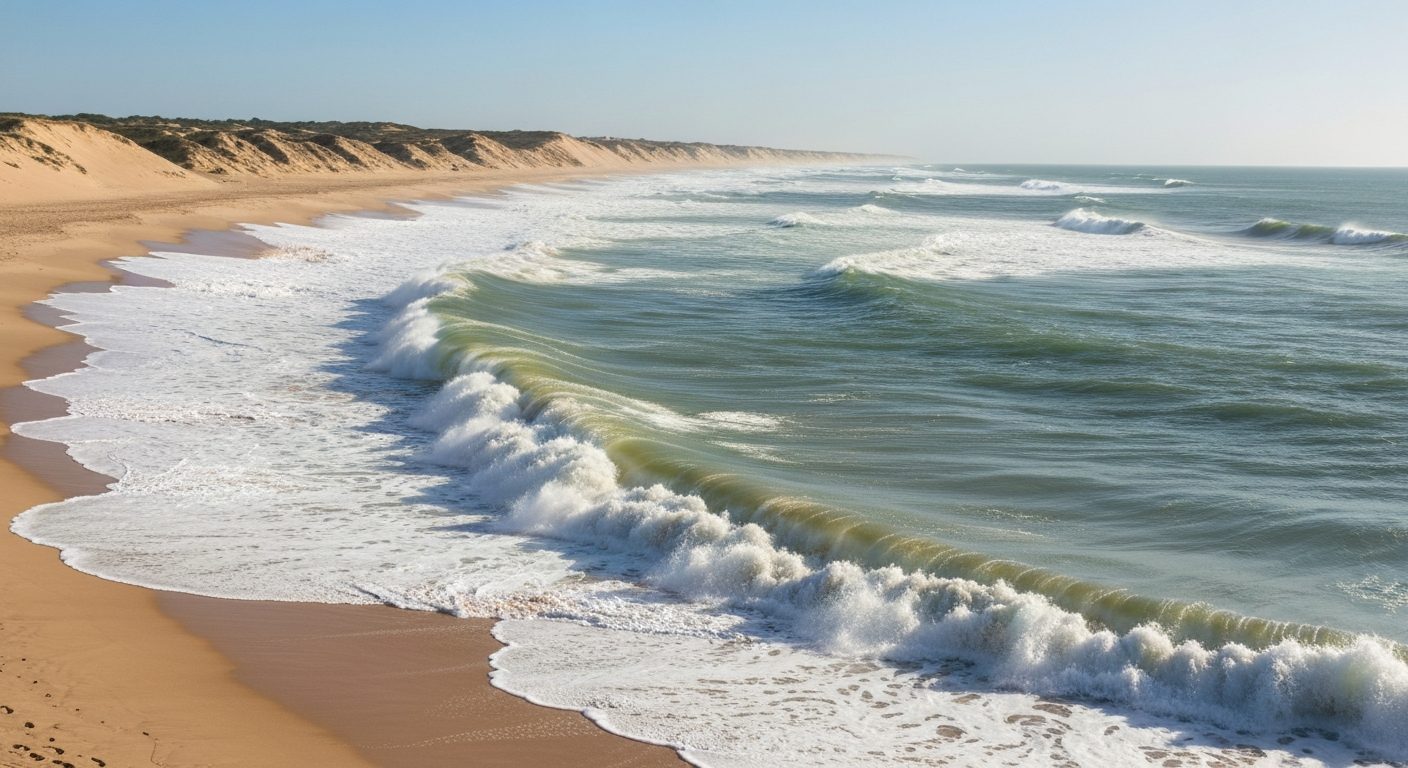
The season runs from roughly May to October, with July and August the hottest and busiest. For the best mix of warm sun and breathing room, aim for June or September, ideally on a weekday. The light is gorgeous, the sea is swimmable, and you will not be fighting for a patch of sand or a parking space.
A few honest words on what to pack. The Atlantic wind picks up most afternoons, so bring a light layer or a windbreaker even when the city is sweltering. The sand is fine and gets everywhere, the sun is strong, and not every stretch has shade, so high factor sunscreen and a hat earn their place. Bring cash for the smaller beach bars and the Transpraia, take your own water, and if you plan to swim, accept that the first plunge is always a cold one.
Make Casa Almada your Lisbon beach base
Casa Almada is a luxury whole-apartment in central Lisbon with a rooftop terrace and skyline views, sleeping up to nine just minutes from the Cais do Sodre ferry to the coast. Book direct with no booking fees.
Check Dates & Book DirectOne last point on logistics. A beach day is far easier when your base is walkable to the ferry. Casa Almada sits on Rua do Almada beside Cais do Sodre, about a five minute stroll from the ferry terminal that takes you across to the coast, and on the way home you can rinse off, regroup on the rooftop terrace, and walk to the Time Out Market for dinner. It works just as smoothly as a city pad for couples or as a Lisbon apartment with a rooftop terrace for a family of nine.
Frequently Asked Questions
How do you get to Costa da Caparica from Lisbon?
You have three easy options. Carris Metropolitana buses run direct from Praca de Espanha and Campo Grande across the bridge, taking about 35 to 45 minutes. You can also take the ferry from Cais do Sodre to Cacilhas, then a connecting bus. Or drive over the 25 de Abril Bridge in 20 to 30 minutes when traffic is light. The ferry route is the most pleasant and avoids bridge jams.
Is Costa da Caparica worth visiting?
Yes, especially if you want a real Atlantic beach close to the city without the polish and prices of Cascais. It is the longest sandy coast near Lisbon, the surf is excellent, the fish grills are cheap and good, and the southern stretches stay genuinely quiet. It is not a manicured resort, and that is the appeal.
Are the beaches sandy?
Very. Costa da Caparica is a continuous run of soft golden sand stretching roughly 15km, backed by dunes and pine forest. There are no rocky coves to navigate, just wide open beach, which is part of why it suits families and surfers alike.
Which is the best beach at Costa da Caparica?
It depends on your day. Praia de Sao Joao and Praia do Paraiso near the town are the most accessible and family-friendly. Praia da Rainha is wilder and great for swimming and surf. For a quiet escape and a fish lunch, ride the Transpraia south toward Fonte da Telha. There is no single best beach, only the best one for what you want that day.
Is Costa da Caparica good for families?
Yes. The northern beaches near the town have the easiest access, lifeguards in summer, gentle entry for paddling, and plenty of bars and restaurants close to the sand. Beginner surf schools cluster here too. Just keep an eye on the Atlantic, which is colder and livelier than the Mediterranean, and bring a windbreaker for the afternoon breeze.
Can you surf at Costa da Caparica?
Absolutely. It is one of the most reliable surf coasts near Lisbon, with consistent Atlantic swell year round. Summer brings friendlier waves and the most surf schools, while autumn and winter deliver more power for experienced surfers. Beginners should head to the northern beaches where the schools and rentals are based. Wear a wetsuit, as the water is cold even in August.
How far is Costa da Caparica from Lisbon?
It is just south of the city across the Tagus, around 20 to 30 minutes by car over the 25 de Abril Bridge, or roughly 35 to 45 minutes by direct bus. With the ferry from Cais do Sodre to Cacilhas plus a connecting bus, you can be on the sand inside an hour from the centre.
When is the best time to go?
The season runs from May to October. July and August are hottest but busiest. For warm sun with far fewer crowds, go in June or September, ideally on a weekday. The Transpraia mini-train runs from roughly June to September, so visiting in those months also unlocks the quieter southern beaches.