
The Short Answer
Planning your stay?
Luxury Apartment Stays at Casa Almada — check availability and book direct.
Lisbon itself has no real beach, but you are spoiled for choice within 20 to 60 minutes. The easiest is the Cascais train line out of Cais do Sodré, with Carcavelos, Estoril, Cascais and wild Guincho all reachable by a €2.40 ticket. For golden sand and space, take the ferry and bus to Costa da Caparica south of the river. If you want our pick: Carcavelos for an easy, full-facility beach day, and Praia da Figueirinha in the Arrábida park when you want clear, calm water.
Insider Tip
Buy a rechargeable Navegante (Viva Viagem) card at any metro or train machine and load it with “zapping” credit. The same card works on the Cascais train, the Cais do Sodré to Cacilhas ferry and the buses on the south side, so you never queue for a paper ticket at the beach. Top it up before you leave central Lisbon, because beach-side machines are often busy on summer mornings.
Here is the honest truth that surprises a lot of first-time visitors: there is no proper swimming beach inside Lisbon. The city sits on the wide Tagus estuary, not the open sea, so the water along the riverfront is for views, not for swimming. The good news is that some of Portugal’s best beaches near Lisbon are a short, cheap ride away, and you do not need a car to reach most of them.
This guide is written the way a local would explain it to a friend. We cover the Cascais and Estoril train line to the west, the long golden sands of Costa da Caparica to the south, and the calmer, clearer coves of Sesimbra and the Arrábida park further out. For each one you get how to get there, how long it takes, who it suits best, and the small details that make or break a beach day.
One practical note before we start. If you are staying in central Lisbon near the river, you are in the perfect spot for this. A Lisbon apartment with a rooftop terrace like ours on Rua do Almada sits a two-minute walk from Cais do Sodré, which is where both the Cascais beach train and the Cacilhas ferry depart. You can be on the sand before the day-trippers who are still working out the metro.
Are there really no beaches in Lisbon?

Correct, and it is worth understanding why before you plan. Central Lisbon faces the Tagus river, which is tidal and busy with shipping. You will see sandy stretches along the waterfront at places like Belém, but these are not swimming spots. The actual coast, where the Atlantic meets clean open sand, begins where the river widens out near Carcavelos to the west and along the whole southern shore of Costa da Caparica.
So when people talk about “Lisbon beaches” they almost always mean day-trip beaches within an hour of the city. Once you accept that, the choice is genuinely excellent. You can swim in calm urban beaches with lifeguards and cafés, surf big Atlantic breaks, or hike down to quiet coves with water so clear it looks like the Mediterranean. For a deeper look at the western shore specifically, our guide to the Lisbon coast beaches covers the smaller spots along the train line in more detail.
Want to wake up two minutes from the beach train?
Check AvailabilityThe Cascais and Estoril train line: the easy option
This is the route most visitors take, and for good reason. Trains leave Cais do Sodré station every 20 minutes or so, run right along the coast, and cost about €2.40 each way with a Navegante card. The whole line is a single, scenic ride with the sea on your left the entire way. You do not need to plan much: turn up, tap in, and get off wherever the beach looks good.
Here is how the main stops break down, in order as the train heads west from the city.
- Carcavelos (about 25 minutes): The biggest and most popular city beach. Wide golden sand, full facilities, beach volleyball, surf schools and gentle waves. This is the all-rounder, and our top pick for an easy beach day with no fuss.
- Estoril, Tamariz beach (about 30 minutes): A pretty, sheltered town beach with calm water, soft sand and a promenade lined with cafés. Very good for families and weaker swimmers.
- Cascais (about 35 to 40 minutes): The end of the line and a lovely seaside town. The town beaches are small and get crowded, but the village itself, the marina and the restaurants make it a great full day out.
- Guincho (a taxi or bus from Cascais): A huge, wild Atlantic beach loved by surfers and windsurfers. The wind here is strong and constant, so it is brilliant for sport and not ideal for a lazy swim.
One honest warning. The water and sand quality on the very first beaches between Lisbon and Carcavelos can be inconsistent, so it is worth riding at least as far as Carcavelos before you settle in. From there westward, the coast keeps getting cleaner and prettier.
Costa da Caparica: golden sand and space to breathe
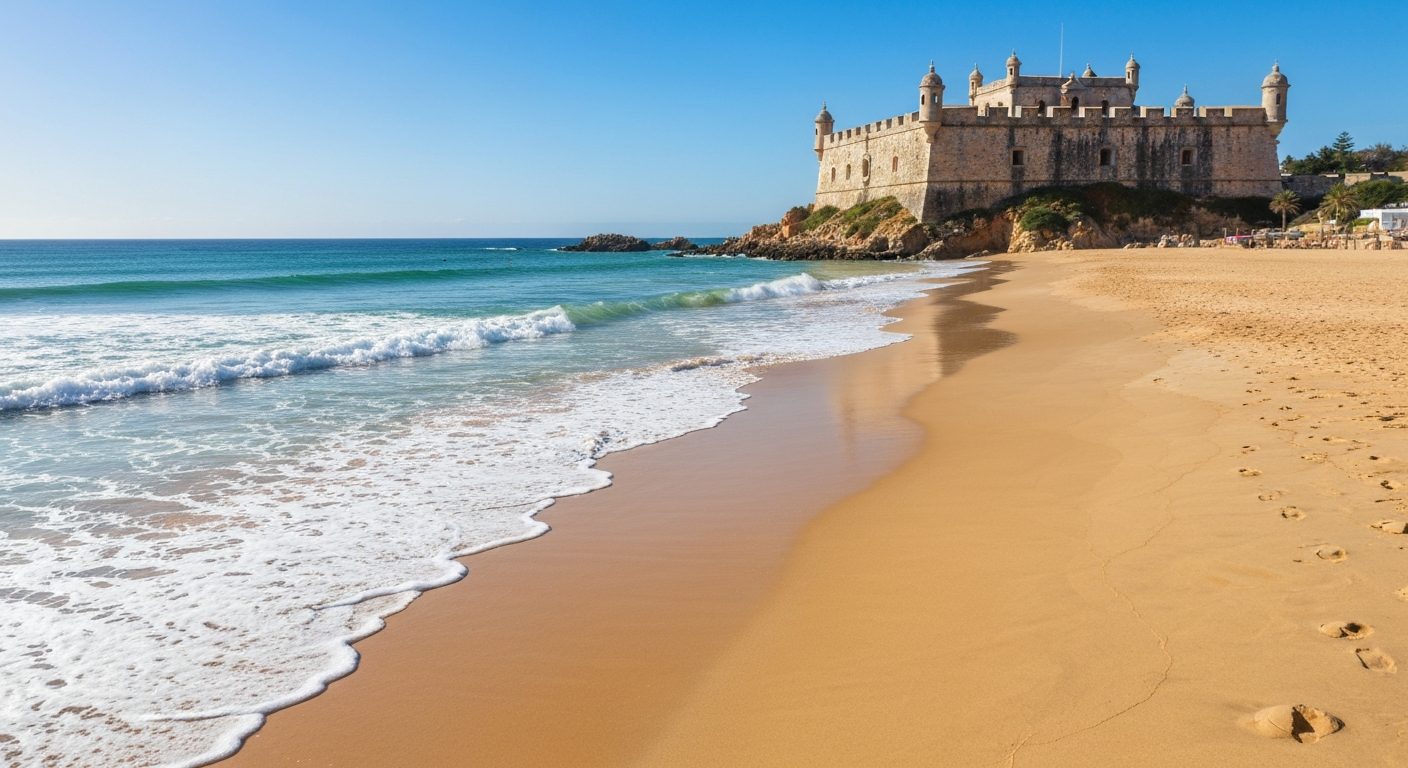
South of the river lies a different kind of beach day. Costa da Caparica is one long, continuous stretch of golden Atlantic sand running for around 15 kilometres, broken into sections that each have their own character. The northern end near the town is busy and full of beach bars; the further south you go, the wilder and quieter it gets.
The most enjoyable way to get there from central Lisbon is by water. Take the ferry from Cais do Sodré across to Cacilhas (about 10 minutes on the water), then a local bus on to Caparica. Alternatively, buses run from Praça de Espanha and Areeiro, or a Bolt rideshare costs roughly €10 to €15. In summer a small open-air “transpraia” train runs along the back of the dunes, dropping you at numbered beach stops so you can pick a busier or quieter spot.
Caparica suits almost everyone. The northern beaches have lifeguards, showers, sun-loungers and seafood restaurants. The southern beaches reward anyone willing to travel a little further with space and calm. It is also a genuine surf coast, with beginner-friendly schools and rental gear. One timing tip: on summer weekends the bridge traffic peaks around midday, so aim to cross before 11am or after 3pm if you are driving.
Sesimbra and the Arrábida park: the clear-water choice
If your idea of a perfect beach is calm, clear, turquoise water rather than rolling Atlantic surf, this is where you head. The Arrábida Natural Park, on the far side of the Setúbal peninsula, shelters a string of coves where green hills drop straight into still, transparent water. Praia da Figueirinha and Praia dos Galapinhos are the famous ones, and on a calm day they look more Mediterranean than Atlantic.
Nearby Sesimbra is a relaxed fishing town with two calm town beaches divided by a fort, excellent seafood and easy swimming. It is one of the most family-friendly options on this whole list.
The trade-off is access. These are the hardest beaches to reach without a car. You can take a Fertagus train towards Setúbal and connect by bus, but it takes well over an hour and the timing needs planning. There is also an important seasonal rule: between mid-June and mid-September, cars are banned from the road near the Arrábida beaches, so you park at Figueirinha or Creiro and ride the local TST shuttle bus the rest of the way. If you only have time for one beach trip and want the prettiest water, this is the one to build a whole day around. It also pairs well with other excursions, so see our roundup of day trips from Lisbon if you want to combine a beach with Setúbal or the wine country.
Beaches near Lisbon at a glance

Here is the quick comparison to help you choose. Times are rough door-to-sand estimates from central Lisbon, assuming you start near Cais do Sodré.
| Beach | How to get there | Time | Best for |
|---|---|---|---|
| Carcavelos | Cascais train from Cais do Sodré | ~25 min | Easy all-round beach day, surf schools |
| Estoril (Tamariz) | Cascais train from Cais do Sodré | ~30 min | Families, calm swimming |
| Cascais town beaches | Cascais train from Cais do Sodré | ~40 min | Seaside town day out |
| Guincho | Train to Cascais, then bus or taxi | ~55 min | Surfers and windsurfers |
| Costa da Caparica | Ferry to Cacilhas + bus, or Bolt | ~35 to 45 min | Long golden sand, space, surf |
| Sesimbra | Bus from Sete Rios, or car | ~50 to 60 min | Calm water, families, seafood |
| Arrábida (Figueirinha) | Car, or train to Setúbal + bus | ~60 min+ | Clear calm water, swimming |
Which beach suits you?
Rather than picking one “best” beach, match the beach to the kind of day you want.
- Travelling with kids: Estoril (Tamariz) or Sesimbra, both calm and well equipped.
- Easiest day with zero planning: Carcavelos, straight off the train with full facilities.
- Want to learn or watch surfing: Costa da Caparica for lessons, Guincho for serious wind and waves.
- Chasing the clearest water: Praia da Figueirinha or Galapinhos in the Arrábida park.
- Combining beach with a town and restaurants: Cascais or Sesimbra.
- No car and short on time: Anything on the Cascais train line.
“What a fabulous time we had in Lisbon! This property is beautiful, well-equipped, and in the perfect location to walk to all the major sites and fabulous restaurants. Susan is a fantastic, responsive host. Highly recommend.”
When to go and what to bring
The Lisbon beach season runs from roughly May to October. July and August are reliably hot and sunny, but they are also the busiest, especially on summer weekends when locals head out too. The sweet spot is June, September and early October, when the sea is warm enough, the sun is strong and the beaches are far less crowded.
A few honest practicalities. The Atlantic here is bracing even in high summer, so it is refreshing rather than bathwarm; the sheltered Arrábida coves are the warmest. Many wilder beaches have no lifeguards, so swim within the flagged areas where they exist. And the western coast, especially Guincho, can be windy by afternoon, so mornings are calmer for sunbathing. Bring water, a hat and sunscreen, since beach-side shops charge a premium. After a salty day, having a fully equipped kitchen and air-conditioning to come home to makes a real difference, which is one quiet advantage of a whole self-catering apartment over a hotel room.
Your base for the perfect Lisbon beach trip
Casa Almada is a luxury whole apartment in central Lisbon with a rooftop terrace and skyline views, sleeping up to nine, a two-minute walk from the Cais do Sodré beach train and ferry. Book direct with no booking fees.
Check Dates & Book DirectFrequently Asked Questions
Are there beaches in Lisbon?
Not for swimming. Central Lisbon faces the Tagus estuary rather than the open sea, so there is no proper bathing beach in the city itself. The real coastline begins around Carcavelos to the west and along Costa da Caparica to the south, both an easy day trip away.
What is the closest beach to Lisbon?
The closest decent swimming beaches are on the Cascais train line, with the first reliable one being Carcavelos at about 25 minutes from Cais do Sodré. Costa da Caparica across the river is a similar distance once you factor in the ferry and bus.
How do you get to the beach from Lisbon?
For the western beaches, take the Cascais train from Cais do Sodré station, which runs every 20 minutes and costs about €2.40 each way. For Costa da Caparica to the south, take the ferry from Cais do Sodré to Cacilhas then a bus, or use a Bolt rideshare for €10 to €15. The Arrábida coves are easiest by car.
What is the best sandy beach near Lisbon?
For sheer sand and space, Costa da Caparica is hard to beat, with around 15 kilometres of golden Atlantic beach. For an easy, full-facility day with no planning, Carcavelos on the train line is the most popular wide sandy beach.
Can you swim at the beaches near Lisbon?
Yes. The water is Atlantic and on the cool, bracing side even in summer, but it is clean and swimmable at the main beaches. The calmest, clearest water is in the sheltered Arrábida coves like Figueirinha and Galapinhos. Always swim within flagged, lifeguarded areas where they exist.
Which beach is best for families?
Estoril’s Tamariz beach and the town beaches at Sesimbra are the best family choices, both with calm, shallow water, soft sand and plenty of cafés and facilities nearby. Carcavelos also works well thanks to its easy train access and full amenities.
Which beach is best for surfing?
Costa da Caparica is the best place to learn, with beginner-friendly surf schools and rental gear. For stronger, more advanced conditions, Guincho near Cascais has powerful Atlantic swell and reliable wind, which also makes it a windsurfing and kitesurfing favourite.
How far are the beaches from Lisbon?
Most are between 25 and 60 minutes from central Lisbon. The Cascais train line beaches run from about 25 minutes (Carcavelos) to 40 minutes (Cascais). Costa da Caparica is roughly 35 to 45 minutes by ferry and bus, while the Arrábida coves take an hour or more and are easiest with a car.
Wherever you choose, staying central makes every beach day shorter and simpler. Casa Almada sits on Rua do Almada, a two-minute walk from Cais do Sodré where both the Cascais beach train and the Caparica ferry depart, so you skip the cross-city scramble each morning. When you are ready to plan your trip, check dates and book direct for the best rates and no booking fees.