
The Short Answer
Planning your stay?
Luxury Apartment Stays at Casa Almada — check availability and book direct.
Yes, Evora makes a great day trip from Lisbon. It is a walled UNESCO town in the Alentejo with a Roman temple, a chapel built from human bones, Portugal’s largest medieval cathedral and some of the best food and wine in the country. The bus from Sete Rios takes about 1 hour 30 minutes and costs around €13 each way. Leave on the first departure and you will see the highlights in a full day, though Evora rewards anyone who can spare a night to slow down.
Insider Tip
Take the 8:00am Rede Expressos bus from Sete Rios so you reach Evora before the midday tour coaches. Walk straight to the Chapel of Bones first, while it is quiet and cool, then save the cathedral rooftop for late afternoon when the Alentejo light turns the plains gold. Book your return seat for around 6:30pm or 7:00pm and you get a long, unhurried day with time for a proper lunch.
Some day trips from Lisbon feel like a theme-park version of Portugal. A trip to Evora feels like the real thing. An hour and a half inland, the tourist gloss falls away and you arrive in a quiet, golden-stone town surrounded by cork oaks and vineyards, where a Roman temple stands in the middle of a medieval square and lunch is the slow, generous Alentejo cooking that locals will tell you is the best in the country.
Evora is the capital of the Alentejo, the vast farming region that fills the map between Lisbon and the Algarve. The whole historic centre is a UNESCO World Heritage Site, and it is small enough to cross on foot in twenty minutes. Inside those old walls you get Roman ruins, a chapel decorated with the bones of around 5,000 people, Portugal’s largest medieval cathedral and a working university town that has kept its character without freezing in time.
This guide covers how to get to Evora from Lisbon, what to see once you arrive, what everything costs, what to eat and drink, and the honest answer to the question everyone asks: is one day enough, or should you stay the night?
How to get to Evora from Lisbon
Evora sits about 130 km east of Lisbon, and the journey takes around an hour and a half whichever way you travel. You have three real options: the express bus, the train, or a guided tour. For most people doing it under their own steam, the bus is the simplest and most frequent choice.
The Rede Expressos bus leaves from Sete Rios bus station in Lisbon, which is on the Blue metro line at Jardim Zoologico. Buses run roughly hourly through the day, the trip takes about 1 hour 30 minutes, and a one-way ticket usually costs around €13. Book online a day or two ahead in summer to guarantee a seat on the early departure.
The train, run by CP (Comboios de Portugal), is the more scenic ride across the Alentejo plains. Trains depart from Lisbon’s Oriente station, take a little under an hour and a half, and cost somewhere in the region of €13 to €20 depending on the service. The catch is frequency: there are only a handful of departures a day, and even fewer at weekends, so the timetable has to fit your plans rather than the other way around.
| Option | From | Journey time | Rough cost (one way) | Good to know |
|---|---|---|---|---|
| Express bus (Rede Expressos) | Sete Rios | ~1h 30m | ~€13 | Most frequent, roughly hourly |
| Train (CP) | Oriente | ~1h 25m | ~€13 to €20 | Scenic, but only a few per day |
| Guided day tour | Central Lisbon | Full day | ~€60 to €120 | Door to door, often adds the megaliths |
| Self-drive | Lisbon | ~1h 20m | Tolls + fuel | Best if pairing with Monsaraz or vineyards |
Both the bus and train stations sit just outside the old walls, around a 10 to 20-minute walk from the historic centre. It is an easy, mostly flat stroll, and once you are inside the walls everything worth seeing is within ten minutes of everything else. You will not need a taxi, a bus pass or a hire car to get around Evora itself.
Want a central Lisbon base for easy day trips?
Check AvailabilityWhat to see in Evora
The joy of Evora is how much it packs into a small space. You can walk the whole centre in an afternoon and still feel like you have travelled through Roman, medieval and Renaissance Portugal in a single loop. Here is what earns a place on a one-day visit.
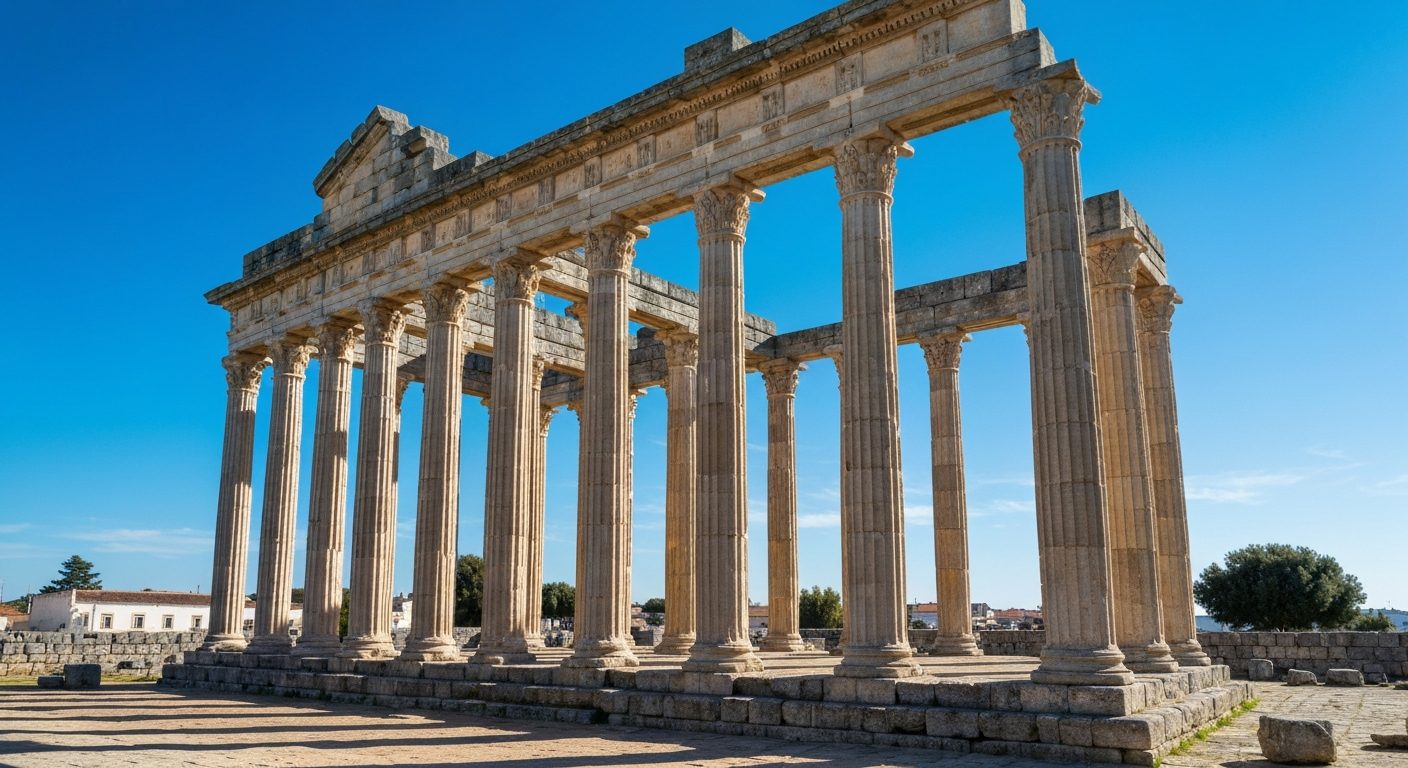
- Roman Temple of Diana: the postcard image of Evora and the one sight you cannot miss. This 1st-century Roman temple still stands tall in the middle of a leafy square, its granite Corinthian columns remarkably intact after nearly 2,000 years. It is free to see, open air, and at its best in the soft light of early morning or late afternoon.
- Chapel of Bones (Capela dos Ossos): the sight people remember for the rest of their lives. The walls and pillars of this small chapel are lined with the bones and skulls of roughly 5,000 people, arranged by 16th-century monks as a reminder of how short life is. An inscription over the entrance reads, “We bones that are here, await yours.”
- Cathedral of Evora (Se): the largest medieval cathedral in Portugal, begun in 1186. Climb to the rooftop terrace for a sweeping view over the white town and the endless Alentejo plains beyond. The cloister and the small sacred-art museum are worth the extra time.
- Praca do Giraldo: the main square and the natural heart of town, ringed by arched cafes and home to a marble fountain dating to 1570. A good spot to pause for a coffee and watch Evora go about its day.
- University of Evora: one of the oldest universities in Portugal, with peaceful cloisters and classrooms lined in hand-painted blue and white tiles depicting the subjects once taught there.
- Rua 5 de Outubro: the gently sloping shopping street linking the square to the cathedral, lined with shops selling cork goods, ceramics and the local ginjinha cherry liqueur, sometimes served in a little edible chocolate cup.
If you have your own car or take a guided tour, it is worth driving 15 minutes out of town to the Almendres Cromlech, a circle of standing stones older than Stonehenge, set among the cork oaks. It is one of the largest megalithic sites in Europe and gets a fraction of the crowds.
The Chapel of Bones, explained

The Capela dos Ossos is the single most talked-about sight in Evora, so it is worth knowing what you are walking into. It sits beside the Church of Sao Francisco, just off Praca do Giraldo, and at first glance it looks like an ordinary side chapel. Then you notice that the walls and columns are entirely covered in human bones and skulls, set into the plaster in careful, deliberate patterns.
It was built in the 16th century by Franciscan monks. Evora’s churchyards were overflowing, and the monks used the exhumed remains to create a space for quiet reflection on mortality. The famous inscription at the door sets the tone before you even step inside. It is not designed to shock so much as to make you think, and most visitors leave more moved than spooked.
A single ticket of around €6 covers the chapel, the church and a small museum, and you can usually see it all in 30 to 45 minutes. Photography is allowed without flash. It is the one place in Evora that draws a queue, so going first thing in the morning is the easiest way to have a calm visit.
“The accommodation offers everything and a little more than you could expect. Absolutely perfect, quiet and high-tech.”
Tickets, hours and what things cost
Evora is refreshingly affordable. The headline sight, the Temple of Diana, costs nothing, and the paid attractions are a few euros each rather than the steep ticket prices you find at some Lisbon landmarks. Here is a guide to what to budget for the main stops.
| Sight | Rough ticket price | Typical hours |
|---|---|---|
| Roman Temple of Diana | Free | Open square, any time |
| Chapel of Bones (Capela dos Ossos) | ~€6 (chapel, church and museum) | Daily, ~9:00am to 6:30pm |
| Cathedral of Evora (Se) | ~€3.50 cloister, ~€5 with rooftop and museum | Daily, ~9:00am to 5:00pm |
| University of Evora | ~€3 | Mon to Sat, varies by term |
| Almendres Cromlech | Free | Open site, daylight hours |
Add it up and you can see all the headline sights for well under €20 a person. Prices and opening hours shift a little with the seasons and the occasional holiday closure, so treat the figures above as a reliable planning guide rather than a guarantee, and double-check anything your day depends on before you set off.
What to eat and drink in Evora
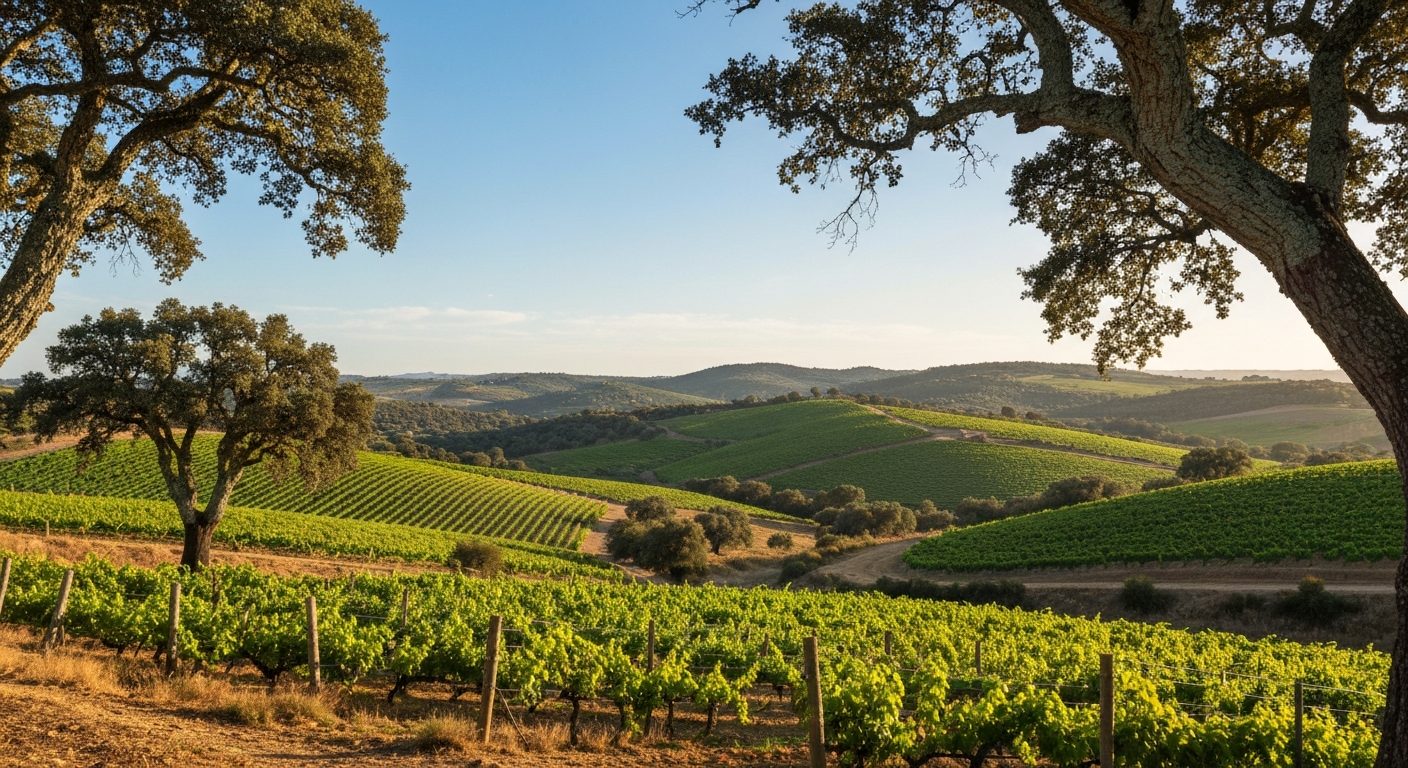
For a lot of visitors, the food is the real reason to come. The Alentejo is Portugal’s pantry, a land of cork oaks, olive groves, wheat fields and free-roaming black pigs, and Evora is the best place to taste it. The cooking is rustic and unhurried, built on bread, herbs, pork and olive oil, and portions are generous. Come hungry and plan a proper sit-down lunch rather than grabbing something on the go.
A few Alentejo dishes are worth seeking out:
- Porco preto: the prized Iberian black pork, raised on acorns and grilled or slow-cooked until rich and tender. It is the signature meat of the region.
- Migas: a humble, delicious dish of bread fried with garlic, olive oil and herbs, often served alongside pork.
- Acorda alentejana: a fragrant bread-and-garlic soup with coriander and a poached egg, the comfort food of the region.
- Ensopado de borrego: a hearty lamb stew ladled over slices of bread.
- Queijo de Evora: a firm, tangy sheep’s cheese, perfect with bread and a glass of red.
- Sericaia with Elvas plums: a cinnamon-scented baked custard, the classic Alentejo dessert.
To drink, this is serious wine country. Alentejo reds are full-bodied, sun-soaked and excellent value, and many restaurants pour a good house wine by the glass for a euro or two. If you have time, the region’s wine route runs through nearby estates, and even in town you can taste local bottles. End the day Evora-style with a ginjinha, the sour-cherry liqueur, ideally in its little chocolate cup from a shop on Rua 5 de Outubro.
For lunch, look beyond Praca do Giraldo to the smaller streets where family-run tascas serve the day’s specials. Booking ahead is wise at the better-known spots, especially at weekends, because the good tables in Evora fill fast.
Is Evora a good day trip, or should you stay overnight?
Here is the honest version. Evora absolutely works as a day trip, and thousands of people do it every week from Lisbon. With about three hours of total travel and a town small enough to cover on foot, an early start gives you a comfortable five or six hours on the ground, which is enough to see the Temple of Diana, the Chapel of Bones, the cathedral and a long Alentejo lunch without feeling rushed.
That said, Evora is the kind of place that gives back more the longer you linger. The town is at its most atmospheric in the early evening, once the tour coaches have left and the golden stone glows under the setting sun. Stay the night and you get a quiet dinner, a slow morning and the option of a vineyard visit or the megaliths the next day. If your schedule allows one overnight outside Lisbon, Evora is a strong candidate.
The practical answer comes down to your trip. If Lisbon is your base and you only have one free day, go for it as a day trip and start early. If you are weighing it against the more famous options closer to the city, see how it fits into your wider plan in our guide to the best day trips from Lisbon, which covers Sintra, Cascais, Evora and beyond.
Why Evora is worth the journey
What sets Evora apart from the day trips closer to Lisbon is that it does not feel staged. Sintra is spectacular but heaving; Cascais is pretty but polished. Evora is a real, lived-in Alentejo town that happens to be sitting on 2,000 years of history. The Roman temple, the bone chapel and the great cathedral are remarkable in their own right, but it is the slower rhythm and the food that tend to win people over.
It also pairs beautifully with time in the capital. Spend a few days soaking up the city, working through a local’s list of things to do in Lisbon, then escape inland for a day to see a completely different side of Portugal. That contrast, between the river light of Lisbon and the wheat-gold plains of the Alentejo, is one of the best things a short trip here can offer.
Where to stay in Lisbon for day trips like this
Day trips like Evora are far easier when your Lisbon base is central and well connected. Casa Almada sits on Rua do Almada beside Cais do Sodre, a short walk from the river, Time Out Market and Pink Street, and a quick metro hop from Sete Rios for the Evora bus or Oriente for the train. You can be out the door and on your way before the morning crowds even gather.
It is a 220 m² whole apartment with three bedrooms, original local Lisbon art on the walls and a rooftop terrace with panoramic views across the city skyline, the perfect place to unwind with a glass of Alentejo red after a day on the road. With space for up to nine guests, a fully equipped kitchen, a wine fridge and a genuinely family-friendly setup, including a baby cot, high chair and toys, it suits multi-generation trips as easily as a couple wanting room to spread out. If you would rather have a a luxury Lisbon apartment than a standard hotel room, this is the kind of base that makes the whole trip feel like home.
Make Casa Almada your Lisbon home
Casa Almada is a luxury whole apartment in central Lisbon with a rooftop terrace, original local art and room to sleep up to nine. Book direct for the best rate and no booking fees.
Check Dates & Book DirectFrequently Asked Questions
How do you get to Evora from Lisbon?
The easiest way is the Rede Expressos express bus from Sete Rios, which runs roughly hourly, takes about 1 hour 30 minutes and costs around €13 each way. CP trains from Oriente station take a similar time and are more scenic, but there are only a few departures a day. Both stations are a 10 to 20-minute walk from the old town.
Is Evora worth visiting?
Yes. Evora is a UNESCO World Heritage town with a Roman temple, a chapel built from human bones, Portugal’s largest medieval cathedral and some of the best food and wine in the country. It feels far more authentic and less crowded than the famous day trips closer to Lisbon, which is exactly why so many travellers love it.
What is there to see in Evora?
The highlights are the Roman Temple of Diana, the Chapel of Bones (Capela dos Ossos), the great Cathedral of Evora with its rooftop view, Praca do Giraldo and the old university with its tiled classrooms. With a car or a tour you can also reach the Almendres Cromlech, a megalithic stone circle older than Stonehenge, just outside town.
What is the Chapel of Bones?
The Capela dos Ossos is a small 16th-century chapel beside the Church of Sao Francisco whose walls and columns are lined with the bones and skulls of around 5,000 people. Franciscan monks built it as a reminder of mortality, and an inscription at the door reads, “We bones that are here, await yours.” A ticket of around €6 covers the chapel, church and a small museum.
How far is Evora from Lisbon?
Evora is about 130 km east of Lisbon, in the heart of the Alentejo. By bus, train or car the journey takes roughly an hour and a half each way, which makes a round trip and a full day of sightseeing comfortably possible.
Is Evora a good day trip or should you stay overnight?
Both work. As a day trip, an early start gives you five or six hours in town, enough to see the main sights and enjoy a long lunch. But Evora is at its best in the early evening once the coaches leave, so if you can spare a night you get a quieter, slower experience and the option of a vineyard or the megaliths the next day.
What is Evora famous for?
Evora is famous for its remarkably preserved old town, a UNESCO World Heritage Site, and especially for the Roman Temple of Diana and the eerie Chapel of Bones. It is also known as the capital of the Alentejo wine and food region, prized for its black pork, sheep’s cheese and full-bodied red wines.
What should you eat in Evora?
Look for Alentejo specialities: porco preto (acorn-fed black pork), migas (fried garlic bread), acorda alentejana (a bread-and-garlic soup with egg), ensopado de borrego (lamb stew) and queijo de Evora sheep’s cheese. Finish with sericaia custard and a glass of local Alentejo red, or a ginjinha cherry liqueur served in a little chocolate cup.